
From graduation to Registered Biomedical Scientist — and beyond.
A plain-English guide to the routes into HCPC registration, the IBMS Registration Portfolio, finding a trainee post, and everything that comes after. Written for people who've never seen the process explained properly before.
The process is well documented. It's just scattered everywhere.
Between the IBMS, the HCPC, your university, your future employer and a dozen forum threads, the path to becoming a Registered Biomedical Scientist is knowable — but rarely explained in one place, in order, for someone starting from zero. This hub pulls it together: routes in, the Registration Portfolio, finding a training post, the HCPC application itself, specialist qualifications, and what your career looks like ten years on.
Understand the routes
Four different paths lead to the same HCPC register. Which one applies to you depends on your degree, not your ambition.
Build your evidence
The Registration Portfolio is a structured, evidence-based assessment — not an exam. We break down exactly what it asks for.
Plan past registration
Registration is the start, not the destination. See how Band, title and responsibility change from graduate to consultant scientist.
We link the source, not just the summary.
Fees, pay scales and portfolio versions are updated by the HCPC, NHS Employers and the IBMS on their own schedules. This hub reflects the most recent figures we could verify, but it is an independent resource — not an official IBMS, HCPC or NHS publication. Always check hcpc-uk.org and ibms.org directly before relying on a fee, date or deadline.
Real advice, from people who've been through it.
A look at what's currently being discussed in the Advice Hub — questions, tips and honest experience shared by other graduates, trainees and registered scientists.
Loading…
Quick-reference guides for the bench.
Free, printable Biomedical Science reference cards covering laboratory quality, sample collection, analytical techniques and discipline-specific topics — here are the most recent additions to the library.
Loading…
Test Your Knowledge
Put your Biomedical Science knowledge into practice with interactive Bench Card activities.
What is a Biomedical Scientist?
A Biomedical Scientist (BMS) analyses blood, tissue and other patient samples in a clinical laboratory to provide the data that doctors use to diagnose, treat and monitor disease. Roughly seven in ten clinical decisions made in the NHS rely on a pathology result — most of which a BMS has tested, validated or authorised before it ever reaches a ward or GP. "Biomedical Scientist" is a legally protected title in the UK: only people registered with the Health and Care Professions Council (HCPC) may use it.
Typical duties
- Receiving, checking and preparing patient samples (blood, urine, tissue, swabs, fluids) for analysis
- Operating and maintaining automated analysers and laboratory information systems (LIMS)
- Interpreting results, flagging abnormal or critical values, and authorising reports for clinical use
- Performing quality control, calibration and method validation to UKAS/ISO 15189 standards
- Supporting clinicians with technical advice, and contributing to multidisciplinary team meetings
- Training and supervising trainees, support staff and students
What the job actually feels like
Day to day, most BMS roles are shift-based bench work: a mix of routine sample processing, troubleshooting failed or unusual results, and quality work. On-call and weekend/night cover is common, especially in larger acute hospital labs, because pathology never closes. The pace varies enormously by discipline and by lab — a busy blood sciences bench in a major trauma centre looks very different to a quieter histopathology cut-up room.
Most BMS work is in NHS hospital laboratories, but private pathology providers, public health laboratories (UKHSA), blood transfusion services (NHSBT), veterinary labs, forensic science, the pharmaceutical and biotech industry, and research all employ people with the same core training.
The main laboratory disciplines
Most BMS train across several disciplines before specialising. Each has its own real-world "colour code" — the cap colour on the sample tubes destined for that department — which we've used as a visual shorthand throughout this hub.
Registered BMS in the NHS typically start at Band 5 (England, 2026/27: roughly £32,073–£39,043), move to Band 6 once specialist-qualified (£39,959–£48,117), and can progress through Band 7 (advanced/senior practitioner), Band 8a–8c (laboratory or service management, consultant scientist) over a career. See the full for qualifications, timeframes and responsibilities at each stage. Private sector and industry pay structures differ and are often negotiated individually.
Four routes, one register.
Every route ends in the same place — your name on the HCPC register as a Biomedical Scientist. Which one applies to you is mostly decided by the degree you already have (or are about to start), not by personal preference.
An IBMS-accredited BSc (Hons) in Biomedical Science is the standard route. Accreditation means the IBMS has checked the degree covers the right clinical specialisms (in enough depth) and meets the QAA subject benchmark for the field. Many accredited courses include a "sandwich" placement year in an approved NHS laboratory, where you can complete most or all of your Registration Training Portfolio while you study.
Advantages
- Clearest, best-signposted path — universities and placement teams know the process inside out
- A sandwich placement year can mean you graduate with most of your portfolio already complete
- Employers recognise accredited degrees immediately; no separate assessment of your academic record needed
Watch out for
- Without a placement year, you still need to find a registration training post after graduating
- Accredited course content is fairly fixed — less flexibility to specialise early
- Placement years are competitive and not guaranteed even on an accredited course
Check accreditation status directly on the IBMS course finder before applying — accreditation can lapse or change between cohorts, and a course being "biomedical science" in name doesn't guarantee it.
If your degree (Biology, Biochemistry, Pharmacology, a non-accredited Biomedical Science degree, etc.) wasn't IBMS-accredited, you aren't excluded — but the IBMS needs to check it covers equivalent ground before you can start a Registration Training Portfolio. This usually means a qualification assessment by the IBMS, and often some top-up modules or a relevant postgraduate qualification to fill gaps in the required clinical specialisms (typically across areas such as clinical chemistry, haematology, microbiology, transfusion science and cellular pathology).
Advantages
- Keeps the door open if you didn't know about Biomedical Science as a career when you chose your degree
- Top-up routes (e.g. a relevant MSc) can also strengthen your CV for competitive trainee posts
Watch out for
- You pay for, and sit, an IBMS qualification assessment before you can apply for training posts in some cases
- Top-up study adds time and cost most accredited-route graduates don't have
- Some employers prefer accredited-degree candidates when posts are oversubscribed
Contact the IBMS Education Team early — ideally before you apply for trainee jobs — so you know exactly which gaps (if any) you need to fill rather than discovering this after accepting a post.
If you qualified outside the UK, there are two practical paths onto the register. The standard international route involves the HCPC directly assessing whether your overseas degree and clinical training are equivalent to a UK BSc (Hons) Biomedical Science. The IBMS Certificate of Competence by Equivalence is for people already working at BMS level in a UK lab without registration — for example, on an MLA/APT contract — who can evidence at least three years of relevant autonomous practice, supported by a named HCPC-registered mentor, assessed through a portfolio plus an oral (viva voce) assessment.
Advantages
- Recognises real laboratory experience rather than requiring you to repeat a UK degree
- The equivalence route can be completed while you continue working and earning
Watch out for
- HCPC international applications require certified document translation and verification, which takes time
- The Certificate of Competence by Equivalence has a fixed annual application window — miss it and you wait a year
- You need access to an IBMS-approved training laboratory and a willing mentor before you can apply
Equivalence-route applications typically open once a year (recently 1 November–31 January) and carry an application fee in the region of £390, usually split into a screening payment and a balance once accepted. Confirm current dates and fees on ibms.org before budgeting your year around it.
The Healthcare Science (Biomedical Science) Degree Apprenticeship combines paid NHS employment (often starting as an Assistant/Associate Practitioner) with part-time study towards an accredited BSc, run jointly by an employer and a university. You work in the lab from day one, your registration training evidence builds naturally out of your day job, and tuition is funded through the employer's apprenticeship levy rather than a student loan.
Advantages
- No tuition fees and a salary from the start — a realistic option if student debt is a barrier
- Portfolio evidence accumulates as part of your normal job rather than a separate placement
- Strong relationship with one employer often smooths the transition into a permanent trainee/Band 5 post
Watch out for
- Places are limited and tied to specific NHS trusts and university partnerships — competition can be high
- Balancing full-time work with part-time study is demanding, especially in shift-based labs
- Geographic choice is constrained: you study where your employer has a partnership, not necessarily where you'd choose
Apprenticeship vacancies are usually advertised on NHS Jobs / Trac and the Institute for Apprenticeships site rather than through standard university clearing — search trust by trust if you have a location in mind.
Every route still ends with the same IBMS Registration Training Portfolio and the same HCPC application. The route only changes how you get access to a training laboratory and a mentor — it doesn't change the standard you're assessed against.
The Registration Training Portfolio, explained properly.
This is the single biggest unknown for most people approaching registration — and it's far more procedural than people expect. It is not an exam. It's a structured collection of evidence, built over time, that proves you can already do the job safely and competently.
What it is
The IBMS Registration Training Portfolio is the work-based evidence record that demonstrates you meet every one of the HCPC's Standards of Proficiency (SoPs) for biomedical scientists. It's completed in an IBMS-approved training laboratory, under a designated Training Officer, and hosted digitally on a platform called OneFile.
Why it's required
Because "Biomedical Scientist" is a protected title, the HCPC needs proof — not just a degree certificate — that you can safely analyse real patient samples and act on the result. The portfolio is that proof. The IBMS administers it on the HCPC's behalf and confirms successful candidates directly to the regulator.
Structure & competencies
The current version (V5.0, in use since September 2023) is organised as:
2 sections
Generic professional-practice modules plus discipline-specific modules, covering the full range of HCPC SoPs.
10 modules
Each module maps to a defined group of Standards of Proficiency, agreed nationally with placement tutors and training managers.
30 pieces of evidence
Three per module: one mandatory piece (set centrally by the IBMS) plus two of your choice, agreed with your Training Officer.
Evidence requirements
Each piece of evidence must clearly map to specific Standards of Proficiency and be signed off by your Training Officer once they're satisfied you've met them. Good evidence is usually a mix of:
Examples of suitable evidence
- Witness statements from your Training Officer or a senior colleague observing you perform a task
- Case studies linking an unusual or abnormal result to the clinical action it informed
- Reflective accounts of incidents, near-misses, or quality non-conformances and what you learned
- Records of internal/external quality assessment (IQA/EQA) participation and your interpretation of results
- Evidence of health & safety, information governance or equipment maintenance tasks
- Direct observation logs and competency sign-off sheets from routine bench rotations
Common mistakes
- Submitting only "easy" routine evidence and avoiding cases that show judgement under pressure
- Vague reflective writing that describes what happened but not what you'd do differently
- Leaving discipline-specific modules until the end of placement, then rushing them
- Evidence that doesn't clearly state which Standards of Proficiency it's mapped against
- Irregular meetings with your Training Officer, so feedback comes too late to act on
Quality evidence is one of the trickiest parts of the portfolio to write up well. Three Bench Cards cover exactly this ground — free, printable reference guides: Westgard Rules, QC Troubleshooting and EQA, ISO 15189 & UKAS — or browse the whole Bench Cards library.
Assessment process
- Build evidence with your Training Officer. You meet regularly throughout your placement/post, logging and agreeing meeting actions as you go (Appendix 4 of the IBMS guidance gives a template for this).
- Sign-off. Each piece of evidence is uploaded, annotated and signed off on OneFile once your Training Officer agrees the standard has been met.
- Request verification. Once all 30 pieces across all 10 modules are complete and signed off, your Training Officer submits an Application for Verification to the IBMS.
- External verifier allocated. The IBMS assigns an independent verifier (an experienced, HCPC-registered BMS) who reviews your completed portfolio on OneFile.
- Laboratory tour. A roughly 40-minute tour with the verifier and you only, in person or online, where you talk through your department and demonstrate your understanding.
- Outcome & "fit to practise". If successful, you're declared fit to practise as a Biomedical Scientist. The IBMS contacts the HCPC directly to confirm this and issues your Certificate of Competence.
Strategies for completing it efficiently
Start a tracker on day one
Log which of the 10 modules and 30 evidence pieces are outstanding from week one — don't rely on memory six months in. Use the My Progress tracker on this site as a starting template.
Front-load the hard modules
Tackle the discipline you find least intuitive earliest, while you still have slack in your placement timeline — not in the final fortnight before requesting verification.
Write reflections immediately
Capture a reflective account the same day an interesting or difficult case happens, while detail is fresh — it's far harder to reconstruct convincingly weeks later.
The recurring theme in feedback from people who've completed the portfolio smoothly is consistency: short, regular catch-ups with a Training Officer beat occasional long ones, and evidence collected "as you go" is consistently rated higher quality than evidence reconstructed retrospectively near a verification deadline.
Ready to go beyond the basics?
Understanding the registration portfolio is one thing. Knowing how to approach your evidence, structure your portfolio and work through OneFile month by month is another.
Where training posts actually come from.
A "training post" usually just means any job in an IBMS-approved laboratory that gives you genuine bench access across the modules you need — it isn't always labelled "trainee."
NHS trainee Biomedical Scientist roles
Some trusts advertise dedicated Trainee Biomedical Scientist posts (often Band 4, rising to Band 5 on registration) specifically for graduates working through their portfolio. These are the most direct route, but are not available everywhere or every year — recruitment depends on trust workforce planning.
MLA / APT positions
Medical Laboratory Assistant (MLA) and Associate Practitioner (AP/APT) roles (typically Band 2–4) are unregistered support posts. Many graduates take one of these first to get into an approved lab, then negotiate access to registration training once established — sometimes converting to a formal trainee post, sometimes building the portfolio alongside the day job with management support.
Placement opportunities
If your degree includes a sandwich placement year, this is usually the smoothest route — your university placement team has existing relationships with approved labs. If you're not on a placement course, ask your university's careers/placement office anyway; some hold contacts for graduate placements too.
Networking & job search
- NHS Jobs / Trac is the primary source for NHS vacancies — search "MLA", "APT", "Trainee Biomedical Scientist" and "Band 4/5 Biomedical Scientist"
- IBMS regional branches and student/early-career events are genuinely useful for hearing about unadvertised openings
- LinkedIn groups and the IBMS forums surface vacancies before they're widely circulated
- Speculative applications to laboratory managers, with a tailored CV, are a legitimate and common tactic in this field
CV & application guidance
Lead with lab hands-on time
Placement weeks, university practical modules, and any work shadowing should be itemised with the actual techniques used (e.g. "performed manual differential blood film analysis"), not just "gained laboratory experience."
Name the disciplines
Recruiters skim for discipline exposure. List Haematology, Biochemistry, Microbiology, Transfusion, Histopathology and Immunology explicitly if you've touched any of them — don't bury this in prose.
Address the portfolio directly
State plainly that you're seeking (or already progressing) your IBMS Registration Training Portfolio — it signals you understand the process and aren't applying blind.
Interview preparation
Pathology interviews tend to combine competency-style questions with scenario-based technical questions. Typical areas to prepare for:
Likely competency questions
- Tell us about a time you identified an error or anomaly in a result — what did you do?
- How do you prioritise when several urgent samples arrive at once?
- Describe a time you had to follow a strict protocol under time pressure
Likely technical/scenario questions
- What would you do if a sample arrived mislabelled or without the correct identifiers?
- Why is quality control run alongside patient samples, and what would you do if it failed?
- What's the clinical significance of [a commonly tested analyte/result] being abnormally high or low?
If you're asked about sample identification or patient safety, anchor your answer in the "three points of identification" principle (full name, date of birth, and a unique identifier such as NHS or hospital number) — it's the foundation interviewers expect you to know cold.
Find your next Biomedical Science role.
Not sure which direction to take?
Answer a few questions or upload your CV to receive a personalised Biomedical Science career recommendation — including role overview, typical pay band, key responsibilities and what registration you'll need.
Search for Biomedical Science roles.
Use the trusted sources below to search for current vacancies across the NHS and private sector. Bench & Beyond links you directly to the right places — no job listings are stored on this site.
NHS Jobs
The official NHS vacancy board. Covers the vast majority of Biomedical Scientist, Trainee BMS, MLA and Associate Practitioner roles advertised across NHS Trusts in England, Scotland, Wales and Northern Ireland.
Useful search terms: Biomedical Scientist · Trainee BMS · Medical Laboratory Assistant · Associate Practitioner · Pathology
Private laboratory and healthcare employers
These organisations employ Biomedical Scientists, MLAs and laboratory support staff outside the NHS. Click any card to go directly to their careers page.
Synnovis
Pathology partnership (GSTT & KCH)
NHS–private pathology joint venture covering major London hospital sites.
View careers →Health Services Labs
HSL · London-based private pathology
Private pathology provider working with NHS and independent healthcare organisations across the UK.
View careers →Eurofins
Eurofins Clinical Diagnostics
International clinical laboratory group with significant UK private and NHS pathology operations.
View careers →Spire Healthcare
Private hospital group
One of the UK's largest private hospital groups, operating pathology services at hospitals across England.
View careers →HCA Healthcare UK
Private hospital group
Major US-owned private hospital operator with a substantial UK presence, including diagnostic laboratories.
View careers →Nuffield Health
Private hospital & wellbeing group
UK non-profit private healthcare provider with hospitals offering pathology and diagnostic services.
View careers →Randox
Diagnostics & laboratory services
Global diagnostics company with a strong UK presence, manufacturing test kits and running commercial laboratory services.
View careers →Want to research the employers behind the opportunities?
Explore organisations across the UK — NHS trusts, independent labs and private providers — and find out what it's really like to work there.
Ready to prepare for your interview?
Reading about roles is a start. Actually answering interview questions — and getting structured AI feedback — is where the preparation happens.
Job overview
Who is this role suitable for?
This guidance is written by Bench & Beyond and complements — not replaces — the official advert.
From Certificate of Competence to your first pay rise.
Once your Registration Training Portfolio is verified, the actual HCPC application is the most mechanical part of the whole journey. Here's what happens, in order.
- IBMS notifies the HCPC. After your portfolio is successfully verified, the IBMS contacts the HCPC directly to confirm you've met the Standards of Proficiency, and issues your IBMS Certificate of Competence.
- You submit your HCPC application. Done online via the HCPC's MyHCPC portal — you'll need identity documents, evidence of your qualification, and (for some routes) a Disclosure and Barring Service (DBS) check or equivalent.
- Pay the registration fee. The HCPC charges an annual registration fee (around £123 a year as of 2025/26 — figures are reviewed periodically, so check the current rate before budgeting). New registrants have historically received a reduced first payment; confirm current terms on the HCPC site.
- HCPC processes the application. Standard domestic applications (with a verified IBMS portfolio behind them) are usually the most straightforward and fastest category the HCPC handles, though processing times vary with application volume.
- You're added to the register. You receive confirmation and can now legally use the title "Biomedical Scientist" and practise unsupervised.
Required documentation
- Proof of identity (passport or equivalent)
- Evidence of your qualifying degree/qualification
- Your IBMS Certificate of Competence (or international equivalent)
- A character/health declaration as part of the online application
- DBS/criminal record check documentation, where required
Common pitfalls
- Submitting before your Certificate of Competence has actually been issued by the IBMS
- Name mismatches between identity documents and qualification certificates (e.g. after marriage) not pre-resolved
- Missing the renewal window once registered, which can lead to lapsed registration and an administrative readmission process
- Assuming international timelines apply to domestic applications, or vice versa — the two processes differ significantly
What happens after registration
Registration isn't a one-off event — it's a renewing professional status with ongoing obligations:
Renewal
You renew periodically (commonly every two years), usually paying by direct debit. The HCPC has been moving toward more frequent, smaller instalments rather than one large biannual payment.
Continuing Professional Development
You must keep a CPD record throughout your registration period. A random sample of registrants is audited at each renewal and asked to submit their CPD profile for review.
Standards & conduct
You're bound by the HCPC's Standards of Conduct, Performance and Ethics, and the Standards of Proficiency, for the rest of your registered career — these are the basis for any fitness-to-practise concern.
HCPC fees are periodically reviewed and increased through public consultation — there is an active consultation on further fee changes as of 2026. Always check hcpc-uk.org for the current rate before relying on a figure from this or any other unofficial source.
Specialising once you're registered.
Registration proves you're safe to practise generally. The IBMS Specialist Diploma (and the qualifications above it) prove you're an expert in one discipline — and it's usually the gateway to Band 6 and beyond.
Purpose
Where the Registration Portfolio verifies fitness to practise across the whole profession, the Specialist Diploma verifies expert-level competence in a single chosen discipline (or, with the right laboratory approval, more than one). It can be used as evidence for promotion, to identify training needs, or by universities assessing work-based learning for postgraduate credit.
Entry requirements
- You must already be HCPC-registered and an IBMS corporate member — Licentiate, Member or Fellow (Associate membership doesn't qualify)
- You must maintain your IBMS membership for the entire duration of the qualification
- Your laboratory needs IBMS approval for post-registration training in the relevant discipline(s)
- Not available to anyone still completing pre-registration (Registration Portfolio) training
Disciplines available
Multi-discipline portfolios are possible where your laboratory holds multi-discipline training approval — some modules carry compulsory corequisites in a related discipline, so check the current module map with your Training Officer before choosing.
Portfolio structure & assessment
The Specialist Diploma portfolio follows the same evidence-based principle as the Registration Portfolio, but the standard of evidence required is higher — reflecting independent, specialist-level practice rather than supervised, generalist competence. Assessment combines:
Portfolio review
Evidence of experiential learning against every non-optional module for your discipline, agreed with your training programme in advance.
Presentation
You present your scope of practice and current trends in your discipline to an IBMS examiner.
Lab tour & oral exam
A practical tour of your department plus an oral examination probing your understanding and judgement.
Successfully completing the Specialist Diploma makes you eligible to upgrade your IBMS membership from Licentiate to Member — and in most laboratories, is the recognised threshold for Band 6 (Specialist Biomedical Scientist) progression.
Beyond the Specialist Diploma
For those aiming at Band 7 and above, two further IBMS qualifications build on this foundation:
Higher Specialist Diploma (HSD)
For Members/Fellows demonstrating senior, highly complex practice. Assessed through a portfolio (professional profile, two discipline-specific essays, a clinical case study, a managerial report, and a reflective statement) plus four written examinations. Both portfolio and exams must be passed; the portfolio is sat first. Success makes you eligible to upgrade to Fellow.
Diploma of Expert Practice (DEP)
For experienced specialists (typically five or more years post-registration) working at the most advanced level — assessed via portfolio, written exam and, in some disciplines, a practical or oral assessment. This (or the dissertation-based Diploma of Specialist Practice) is the level most associated with Consultant Scientist roles.
Study & organisation tips
Treat it as a 12–24 month project
Specialist portfolios are typically completed alongside full-time work; build evidence collection into your existing workload rather than treating it as something extra bolted on at the end of a shift.
Use real complexity
Examiners specifically look for evidence of judgement on complex, unusual or borderline cases — not routine work. Actively seek out audits, training delivery, or committee involvement to evidence organisational competence too.
Book your examiner early
The IBMS aims to allocate an examiner within around two months of your application — factor this lead time into your own planning rather than assuming an immediate slot.
Typical day-to-day workload
Career opportunities
Common laboratory techniques
Common analysers & equipment
Common patient samples
Common conditions investigated
Once HCPC registered, Biomedical Scientists can progress onto the IBMS Specialist Diploma within this discipline to build deeper, formally recognised expertise.
Learning outcomes
Portfolio structure
Assessment process
Recommended reading & resources
This is a summary in our own words, not the official guidance — always check current requirements directly with the IBMS.
View the official IBMS Specialist Diploma page for this discipline →Graduate to Consultant Scientist: the full map.
Pay bands below are NHS Agenda for Change rates for England, 2026/27 (effective 1 April 2026, per NHS Employers). Scotland, Wales and Northern Ireland negotiate slightly different uplifts most years, and private/industry employers set their own scales — treat these as a reliable shape, not a guarantee.
Graduate
BSc (Hons) in Biomedical Science or a related/equivalent science qualification, with or without a placement year completed.
Trainee Biomedical Scientist / MLA–APT
Working in an IBMS-approved laboratory, building the Registration Training Portfolio under a Training Officer — either in a dedicated trainee post or an unregistered support role (MLA/APT) with training access agreed.
Registered Biomedical Scientist
HCPC-registered and able to use the protected title. Works with growing independence across rotations, authorising routine results and beginning to take on out-of-hours/on-call duties.
Specialist Biomedical Scientist
Deep competence in one (or more) chosen discipline, often supervising trainees and contributing to quality, audit and method development within that department.
Senior Biomedical Scientist
Section or shift leadership, complex case oversight, training co-ordination, and significant input into departmental quality and compliance (UKAS/ISO 15189).
Advanced Practitioner
Extended clinical scope — in some disciplines this includes reporting roles traditionally held by clinical scientists or pathologists (e.g. histopathology cut-up, andrology reporting), alongside research, audit and service development leadership.
Laboratory Manager
Operational and people leadership for a department or whole laboratory: staffing, budgets, accreditation (UKAS), service performance and strategic relationships with clinical teams.
Consultant Scientist
The most senior clinical/scientific leadership track — strategic clinical authority, complex case reporting, research leadership and service-wide direction, working alongside or in place of consultant pathologists in some networks.
Many BMS move sideways into research, industry, quality management, education or regulatory roles at any of these stages — the ladder above describes the clinical-laboratory track specifically, not the only valid career.
Advice from people who've actually done this.
A community board for working and trainee Biomedical Scientists to share what actually helped — registration portfolio tactics, interview tips, day-in-the-life reality checks, things they wish someone had told them.
Share something useful
The questions everyone asks first.
Checklists, glossary & official links.
Downloadable, editable checklists generated on the spot, plus the official sources you should always cross-check against.
Downloadable guides & checklists
Jargon glossary
Official sources
Regulators & professional body
Track your own portfolios.
Saved privately to your browser profile on this site — only you can see this, it isn't shared with other visitors. Use the starter checklist or clear it and build your own.
Spot something wrong, or got a suggestion?
Fees, portfolio structures and pay bands get revised by the official bodies fairly often — if something here looks out of date, or you think a section is missing, let us know. This goes straight to the people running the site, not to a public board.
Send a message
A note on how this works
This form is handled by Netlify's built-in form service — submissions land in the site owner's Netlify dashboard. There's no public visibility of what you send here, unlike posts in the Advice Hub.
If you'd rather not use the form, corrections and suggestions are just as welcome by email — see the footer for contact details.
How Bench & Beyond handles your information.
This page explains, in plain English, what information this site collects, why, and what choices you have. It covers exactly what this site actually does — nothing more.
30 June 2026
Who this policy covers
Bench & Beyond is an independent, plain-English knowledge hub for UK Biomedical Science graduates and trainees. It isn't affiliated with the IBMS, HCPC or NHS. References to "we", "us" or "the site" below mean the person or people running Bench & Beyond.
Information you choose to give us
Advice Hub posts & comments
When you post advice or a comment, we store the category, the message itself, and — only if you choose to provide them — a display name and a professional title/role. These fields are optional; leaving them blank shows as "Anonymous". Posts and comments are public — visible to anyone who visits the Advice Hub, not just to us. Please don't include anything you wouldn't want publicly visible.
Feedback form
The Feedback & Contact form asks for an optional name, an optional email address, a topic, and your message. Submissions go to the site owner's Netlify dashboard and are not displayed publicly anywhere on the site.
Information collected automatically
This site uses Google Analytics 4 to understand how the site is used — which pages are visited, roughly how people found the site, and general device/browser/location information (typically city or country level, not your precise location). Google Analytics sets cookies in your browser to do this. We don't use this information to identify you personally, and we don't combine it with anything you post on the Advice Hub or submit via the Feedback form.
Like virtually every website, our hosting provider (Netlify) automatically processes basic technical information — such as your IP address and browser type — simply as part of serving you the page. This is standard web server activity; we don't separately collect or analyse it ourselves.
Information that stays on your device only
Several features are designed so that nothing is sent to us at all:
- My Progress trackers (Registration Portfolio and Specialist Portfolio checklists) — saved only in your browser's local storage on your own device. We never see this.
- "Helpful" votes on Advice Hub posts — your browser remembers which posts you've already voted on (so the button doesn't let you vote twice), again stored only on your device.
- The search box — searches the page content already loaded in your browser. No search terms are sent anywhere.
Cookies and similar technologies, summarised
| Technology | Set by | Purpose |
|---|---|---|
| Cookies | Google Analytics | Understanding site usage (see above) |
| Local storage | This site's own code | My Progress trackers, remembering your votes — stays on your device |
| Session storage | This site's own code | Used only on the password-protected admin page, to avoid re-entering the password every page load |
We don't currently show a cookie-consent banner. If that changes, this policy will be updated to match.
How we use this information
- To display Advice Hub posts and comments to other visitors, which is the whole point of that feature
- To read and respond to Feedback form submissions
- To understand, in aggregate, how the site is used, so we can improve it
- To keep the site secure and working properly
We do not sell any information, and we do not use anything you submit for advertising or marketing purposes.
Who we share information with
We don't sell or hand over your information to third parties for their own use. A small number of service providers process data on our behalf, purely to make the site work:
- Google (Google Analytics) — processes the analytics information described above, under Google's own privacy terms
- Netlify — hosts the site, stores Advice Hub posts/comments, and receives Feedback form submissions, as our hosting and infrastructure provider
Career Match and CV uploads
If you choose to use the Career Match feature, you can upload your CV or paste its text to receive personalised Biomedical Science career guidance and relevant job recommendations. Using this feature is entirely voluntary.
Information we process
An uploaded or pasted CV may contain personal information, which may include your name, contact details, qualifications, employment history, laboratory experience, professional registrations (such as HCPC registration), and any other information you choose to include in your CV. We process only the information you actively provide — we do not infer, obtain or supplement it from any external source.
Why we process it
Your CV is processed solely to build a Biomedical Science career profile, identify relevant qualifications and experience, match you with appropriate career opportunities, generate personalised Career Match recommendations, and provide educational career guidance tailored to your stage of progression.
Data sharing
Bench & Beyond does not sell uploaded CVs or any personal information contained within them. Your CV is not shared with employers, recruitment agencies or any third party without your explicit consent. Career recommendations are generated solely for your own use.
Your responsibility
Please only upload information you are comfortable sharing and ensure that the information you provide is accurate. You are not required to upload a CV to use Bench & Beyond — the Career Match questionnaire offers an alternative path that does not require a document upload.
Career Match provides educational career guidance based solely on the information you supply. Recommendations are intended to support your career planning and should not be interpreted as a guarantee of employment, interview selection or eligibility for any particular role. Always verify specific requirements — such as current band structures, portfolio requirements and registration criteria — with the relevant official bodies.
How long we keep information
- Advice Hub posts and comments are kept indefinitely so the discussion remains useful, unless removed by the site owner via the admin moderation tools
- Career Match CV uploads and pasted text are processed in your browser to generate recommendations and are not transmitted to or stored on our servers. No copy of your CV is retained by Bench & Beyond after your session ends. If a future version of Career Match introduces profile-saving functionality, this policy will be updated to reflect that clearly before the feature goes live
- Feedback form submissions are retained in the Netlify dashboard until manually deleted
- Analytics data is retained in line with Google Analytics' own standard retention settings
- Information stored only on your device (My Progress, vote history) stays there until you clear your browser's storage for this site — we have no way to delete it remotely, because we never receive it
Your privacy rights
If you're in the UK, you have rights under UK GDPR, including the right to:
- Ask what information we hold that relates to you
- Ask us to correct or delete it (for example, a name on an Advice Hub post or comment)
- Object to how it's used, or ask us to restrict that use
- Complain to the Information Commissioner's Office (ICO) if you're unhappy with how we've handled something
Because most Advice Hub content is submitted anonymously or under a chosen display name with no account or login, we may not always be able to identify which post or comment is "yours" — if you contact us, please include enough detail (e.g. the wording of the post, roughly when it was submitted) for us to find it.
Children's privacy
This site is intended for UK Biomedical Science graduates, students and professionals, and isn't directed at children. We don't knowingly collect information from children.
Changes to this policy
If how the site handles information changes, we'll update this page and adjust the "Last updated" date above.
Contact us about privacy
For any privacy question, or to ask about information you believe relates to you: benchandbeyond@outlook.com.
The basics of using this site.
These Terms cover how you can use Bench & Beyond, and what to expect from it. They sit alongside — not instead of — the accuracy note you'll find on the homepage and in the footer about fees, dates and regulatory detail going out of date.
14 September 2026
1. Educational purpose
Bench & Beyond is an independent, educational resource for people pursuing a career as a UK Biomedical Scientist. It's intended to help you understand the registration process, career pathway and related opportunities — it is not professional, legal, financial or careers advice, and it is not a substitute for guidance from the IBMS, the HCPC, your employer, or your university. Using this site does not guarantee any particular outcome, including registration, employment, or exam success.
2. User-generated content (Advice Hub and comments)
The Advice Hub lets visitors submit posts and comments. This content reflects the views and experience of whoever wrote it — not the views of Bench & Beyond — and we don't verify its accuracy before it's published. By submitting a post or comment, you confirm it's your own genuine experience or view, and you grant us permission to display it on the site (and remove it, per section 4 below). You're responsible for what you submit.
3. Acceptable use
When using this site, including the Advice Hub, Feedback form and any other interactive feature, you agree not to:
- Post anything false, defamatory, abusive, discriminatory, or otherwise unlawful
- Post anyone else's personal information without their consent
- Impersonate another person or organisation
- Post spam, advertising, or unrelated promotional content
- Attempt to disrupt, hack, or gain unauthorised access to any part of the site, including the admin tools
4. Moderation and removal of content
The site owner may remove, at their sole discretion and without prior notice, any post, comment or other content that breaches these Terms or that they otherwise consider inappropriate. There's no automated filtering — moderation is manual, via password-protected admin tools — so removal may not be immediate. We're under no obligation to monitor user-generated content continuously.
5. Intellectual property
The Bench & Beyond name, logo, and the site's original written content, design and code belong to the site owner unless stated otherwise, and may not be reproduced elsewhere without permission.
The Benchy and Super Benchy characters — including their names, visual designs, artwork and associated branding — are original creations belonging to the site owner. All rights in those characters are reserved. You may not reproduce, adapt, redistribute or use the Benchy or Super Benchy names, artwork or designs for any commercial or public purpose without prior written permission from Bench & Beyond.
Content you submit to the Advice Hub remains yours, but by posting it you grant us a licence to display it on this site. References to the IBMS, HCPC, NHS, and other organisations are for identification purposes only — their names, logos and trade marks belong to those organisations, and this site is not affiliated with or endorsed by any of them.
6. External links
This site links to external sites — including official bodies (such as hcpc-uk.org and ibms.org), employers, training providers, and other third parties referenced in the Opportunities Hub or elsewhere. We don't control these sites, haven't verified everything on them, and aren't responsible for their content, accuracy, or availability. Listing or linking to a third party is not an endorsement.
7. Limitation of liability
This site is provided "as is", without warranties of any kind. To the fullest extent permitted by law, we are not liable for any loss or damage arising from your use of the site, including reliance on Advice Hub content, temporary unavailability of the site, or use of any third-party site linked from it. Nothing in these Terms limits liability that cannot legally be limited, such as liability for fraud.
8. Changes to the website
We may add, change, suspend, or discontinue any part of this site, including these Terms, at any time and without notice. Continuing to use the site after changes are published means you accept the updated Terms — it's worth checking back occasionally if you're a regular visitor.
9. Contact
Questions about these Terms: benchandbeyond@outlook.com.
Let's find roles that fit where you are right now.
Answer a few quick questions, or upload your CV, and we'll point you to current vacancies that genuinely match your stage and interests — with our reasoning shown, not just a list.
📄 Upload your CV
We'll read it and match you automatically. Nothing is stored.
Your CV is processed solely to generate your personalised career recommendations. It is never sold or shared with employers or recruitment agencies without your consent. See our Privacy Policy for full details.
PDF, Word (.docx) or plain text, up to 5MB
💬 Answer a few questions
No CV needed — takes about a minute, feels like a quick quiz.
What's your highest qualification right now?
Is your degree IBMS accredited?
Are you HCPC registered?
Have you completed your Registration Portfolio?
Which discipline(s) interest you?
Pick as many as you like, or skip to see everything.
Preferred UK region?
Which best describes you right now?
A couple of things we couldn’t tell from your CV.
Only asking what genuinely affects your recommendation — won’t take long.
Is your Biomedical Science degree IBMS accredited?
Are you currently HCPC registered?
Did you train and qualify outside the UK?
This affects which roles we’d realistically recommend, even with UK registration.
Have you completed your Registration Portfolio?
Have you completed an IBMS Specialist Diploma?
Which laboratory discipline do you primarily work in?
What is your current NHS Band?
Approximately how many years have you worked as a Biomedical Scientist?
Does this look right?
We built this profile from your CV. Correct anything that’s wrong before we match you.
Search for current Biomedical Science vacancies directly on NHS Jobs, or explore private sector employers in the Opportunities Hub.
Where could this career path take you?
Want to explore the NHS trusts, independent labs and private healthcare organisations where Biomedical Scientists actually work?
Ready to practise?
If you're applying for Biomedical Science roles, practise interview questions designed around your career level — and get AI feedback on every answer.
Advice Hub
Questions, tips and experiences from the Biomedical Science community. Browse posts below, or share something useful.
Post to the Advice Hub
Track your portfolio progress.
Personal checklists for your Registration and Specialist portfolios. Saved in your browser only — nothing is sent anywhere.
Frequently asked questions.
Bench Cards
Practical Biomedical Science quick-reference guides from Bench & Beyond.
Bench Cards are concise, printable Biomedical Science reference guides covering laboratory quality, sample collection, analytical techniques and discipline-specific topics. Designed for students, trainees and practising Biomedical Scientists.
Coming soon
New Bench Cards are added regularly. Here's what's currently in progress.

Test Your Knowledge
Practise your Biomedical Science knowledge with interactive activities drawn from the Bench Cards library. Each activity opens within its Bench Card’s online version — so you can read the full educational content first or jump straight to the activity.
Practising as a Biomedical Scientist in the UK — a guide for international applicants.
Whether you trained overseas, hold an international biomedical science qualification, or are already working in the UK without registration, this guide explains the pathways to becoming an HCPC-registered Biomedical Scientist in plain English.
This guide is written for three groups of people.
Overseas-qualified Biomedical Scientists
You have professional experience and qualifications from outside the UK and want to apply to the HCPC register as a Biomedical Scientist directly.
International Biomedical Science graduates
You hold a biomedical science or related degree from a university outside the UK and are considering pursuing HCPC registration.
Overseas scientists already in the UK
You are already working in a UK clinical laboratory — for example as an MLA or associate practitioner — and want to work towards HCPC registration.
Every application to the HCPC is assessed individually. Your specific route will depend on your qualifications, clinical experience, country of training, and English language proficiency. The steps below outline the general process — your experience of it may differ. Always contact the HCPC and IBMS directly to understand how the process applies to your situation.
What is HCPC registration — and why do you need it?
What is the HCPC?
The Health and Care Professions Council (HCPC) is the statutory regulator for 15 health and care professions across the UK, including Biomedical Scientists. It maintains a public register of professionals who have demonstrated they meet its standards of proficiency, conduct, and professional behaviour.
Why is it required?
"Biomedical Scientist" is a protected title in the UK. Anyone using this title — or working in a role that requires it — must be on the HCPC register. Working without registration where it is required is both illegal and unsafe. Most NHS and private laboratory employers require HCPC registration before appointment to a Biomedical Scientist post.
What does the HCPC assess?
The HCPC assesses whether your training, qualifications and experience are broadly equivalent to a UK BSc (Hons) in Biomedical Science and whether you meet its Standards of Proficiency — a framework covering clinical knowledge, laboratory skills, professional behaviour and communication. Each application is considered individually; the outcome depends on your specific background.
Registration does not grant the right to work
HCPC registration confirms your professional qualifications. It does not grant UK immigration status or the right to work. You will need to ensure you have the correct visa or work authorisation separately through the UK Home Office. The Skilled Worker visa is the most common route for healthcare professionals — check GOV.UK for current requirements.
Your route to HCPC registration — step by step.
The steps below outline the general international registration process. The specific requirements for each step will depend on your individual background. Not every applicant will pass through every step in the same way.
Have your qualifications assessed
Before applying directly to the HCPC, you will need to understand how your overseas qualifications compare to UK standards. This typically involves two separate assessments.
UK ENIC Statement of Comparability
If your degree is from outside the UK, the IBMS requires a UK ENIC Statement of Comparability as part of any non-accredited degree assessment. UK ENIC (the UK's official national information centre for global qualifications) compares your degree to the UK qualifications framework — for example, confirming it is comparable to a UK BSc (Hons) at Level 6. Your statement must confirm honours degree level (Level 6); an ordinary degree comparison alone will not meet requirements.
IBMS Degree Assessment (if applicable)
If your overseas degree has not been IBMS-accredited, the IBMS will assess whether it covers the required clinical specialisms in sufficient depth — including clinical chemistry, haematology, microbiology, blood transfusion, and cellular pathology. If gaps are identified, you may be required to complete additional top-up modules or a relevant postgraduate qualification before proceeding to portfolio training.
If you are unsure whether your degree qualifies, contact the IBMS Education Team at degreeassessment@ibms.org before paying any assessment fees. Understanding your position early avoids delays and unexpected costs later in the process.
Meeting any additional requirements
Depending on the outcome of the qualification assessment, you may need to complete additional education, training, or supervised practice before you are eligible to progress. This is not a failure — it is a recognised part of the process for many international applicants whose training covered different clinical specialisms.
Common requirements at this stage include:
- Top-up modules covering specific clinical disciplines (e.g. cellular pathology/histology, which is absent from some overseas curricula)
- A UK-based postgraduate qualification (e.g. an MSc in Biomedical Science) that addresses content gaps
- Evidence of clinical practice in specific laboratory disciplines
The HCPC and IBMS assess each application individually. Some applicants with strong, broad clinical backgrounds may have few or no additional requirements; others may require significant additional training. Do not assume a particular outcome based on others' experiences.
Registration training — two possible paths
Depending on your circumstances, you may be directed towards one of two registration training routes.
IBMS Registration Training Portfolio
If your qualifications are assessed as broadly comparable to a UK degree, you may be eligible to complete the IBMS Registration Training Portfolio in an IBMS-approved UK clinical laboratory. This involves demonstrating competence against the HCPC Standards of Proficiency through work-based evidence, completed under a designated Training Officer. On successful completion, the IBMS confirms your eligibility to the HCPC. This is the same portfolio that all UK trainee Biomedical Scientists complete — for more detail, see the Registration Portfolio guide.
IBMS Certificate of Competence by Equivalence
If you are already working in a UK clinical pathology laboratory at the level of a Biomedical Scientist (e.g. as an MLA or in a related role) and can demonstrate at least three years of autonomous professional practice, you may be eligible for the Certificate of Competence by Equivalence. This is a portfolio-based qualification assessed by a panel and followed by an oral (viva voce) assessment. Applications typically open once a year — check ibms.org for current dates and fees before planning your timeline.
Both pathways lead to HCPC registration as a Biomedical Scientist. The most appropriate route for you depends on your existing experience and employment situation in the UK. The IBMS and HCPC can advise on which route is most suitable for your individual circumstances.
Applying to the HCPC
Once your qualifications and competencies have been assessed, you apply for registration directly through the HCPC's online international application system. This is the same process regardless of your country of origin.
- Certified copies of your qualifications and transcripts
- Evidence of professional experience and clinical practice
- Character and health references
- English language proficiency evidence (see below)
- A mapping document linking your training to the HCPC Standards of Proficiency
- Payment of the application scrutiny fee
- Successful — accepted for registration; pay the registration fee to join the register
- Test of competence — further assessment required before a decision is made
- Period of adaptation — supervised practice and/or academic training to address identified gaps (primarily for EEA nationals)
- Unsuccessful — refused entry; you have the right to appeal within 28 days
All documents submitted to the HCPC must be certified copies — not originals or uncertified photocopies. Documents in languages other than English must be accompanied by a certified translation. Submitting uncertified or untranslated documents is a common cause of delay. Always read the HCPC's current guidance on document requirements before submitting your application.
Finding employment in UK Biomedical Science
Once registered with the HCPC, you can apply for Biomedical Scientist posts in the UK. Most laboratory positions are advertised on NHS Jobs. Private pathology organisations — including Synnovis, SYNLAB, HSL, and Eurofins — also recruit regularly.
Most NHS Biomedical Scientist posts are graded on the NHS Agenda for Change (AfC) pay scale. Newly registered Biomedical Scientists typically join at Band 5. NHS roles are advertised at jobs.nhs.uk.
After registration, the IBMS Specialist Portfolio opens the route to Band 6 Specialist BMS level. The Specialist Portfolio guide and Career map explain what comes next.
Still looking for your first Biomedical Science role?
Many graduates do not secure a Trainee Biomedical Scientist position immediately after graduation. Explore alternative laboratory roles, gain valuable UK laboratory experience, and strengthen your future Biomedical Scientist applications.
Evidence of English language proficiency
Effective communication is a core part of the HCPC's Standards of Proficiency. International applicants are generally required to demonstrate English language proficiency as part of their registration application. Requirements were updated on 29 January 2025.
Qualifying countries
If your primary qualifying degree was completed in a country on the HCPC's qualifying countries list, you can use this as evidence of English proficiency without taking a test. Check the HCPC website for the current list of recognised countries — this list is subject to change.
Approved tests
All other international applicants must provide a certificate from an HCPC-approved English language test. Currently accepted tests include IELTS Academic, TOEFL iBT, and OET (Occupational English Test, added from January 2025). Confirm which tests are accepted on the HCPC website before booking.
Required scores
For most professions (including Biomedical Science), the HCPC requires an overall IELTS score of 7.0 with no individual component scoring below 6.5. Equivalent scores apply for TOEFL and OET. Self-declarations of English as a first language are no longer accepted from January 2025. Always verify current score requirements with the HCPC directly.
English language requirements for HCPC registration changed significantly on 29 January 2025. Requirements may continue to evolve. Always read the current HCPC guidance at hcpc-uk.org before making decisions based on any third-party summary, including this one.
Common questions from international applicants.
Can I work as a Biomedical Scientist before I am HCPC registered?
No. "Biomedical Scientist" is a protected title under the Health Professions Order 2001. You cannot legally use this title or work in a role that requires it without HCPC registration. However, you may be able to work in a supporting role — such as Medical Laboratory Assistant (MLA) or Associate Practitioner — while working towards registration. Confirm the specific requirements with any prospective employer.
Will my overseas degree automatically be accepted?
Not automatically. The HCPC and IBMS assess whether your qualifications are broadly equivalent to a UK BSc (Hons) in Biomedical Science. The assessment covers academic level, clinical content and scope. Some applicants are assessed as fully equivalent; others are required to complete additional training or modules. The outcome depends on your individual qualifications and experience.
How long does the process take?
Timelines vary widely based on individual circumstances. An HCPC international application alone typically takes around 60 working days once all documents have been received. If additional training or portfolio completion is required, the overall process can take considerably longer. Start early, prepare your documentation thoroughly, and expect the process to take at least several months — often longer.
Do I need UK work experience?
You do not necessarily need UK work experience to apply to the HCPC directly via the international route. However, if you are required to complete a Registration Training Portfolio or Period of Adaptation, you will need to be based in an IBMS-approved UK clinical laboratory. Finding a laboratory willing to take you on as a trainee is something you will need to arrange yourself — the HCPC and IBMS cannot place you.
Can I work in a different laboratory role first?
Yes, and for many international applicants this is a practical approach. Working as an MLA, biomedical support worker, or Associate Practitioner in a UK laboratory gives you exposure to NHS laboratory systems and working practices, and may count towards the experience requirements for the Certificate of Competence by Equivalence route. It will not, however, replace the formal registration process.
Does the HCPC recognise European qualifications differently?
Following the UK's exit from the EU, European Economic Area (EEA) qualifications are no longer automatically recognised under mutual recognition rules. EEA-trained applicants must now use the standard international application route. Those who are nationals of a relevant European state and already entitled to practise there may be eligible for a Period of Adaptation if shortfalls are identified. Contact the HCPC directly for current guidance specific to your situation.
Official sources — always verify with these directly.
The links below are to the official organisations responsible for registration, qualification assessment, and employment in UK Biomedical Science. Requirements change — these are the authoritative sources.
HCPC — Health and Care Professions Council
The statutory regulator. Your registration application goes here.
IBMS — Institute of Biomedical Science
The professional body. Assessment, portfolios and qualifications.
NHS and employment
Finding work and understanding immigration requirements.
This guide is produced by Bench & Beyond as an educational resource. We are not affiliated with the HCPC, IBMS, NHS, UK ENIC, or any other organisation mentioned in this guide. All information should be verified with the relevant official bodies before you make any decisions. Requirements, fees, and timelines are subject to change at any time.
Alternative Career Pathways
Practical guidance for Biomedical Science graduates who have not yet secured a Trainee Biomedical Scientist position.
This guide is an educational resource, not professional careers or immigration advice. Sponsorship policies, visa requirements and employer practices change regularly. Always verify current requirements with the relevant official bodies, your prospective employer, and a qualified immigration adviser where appropriate.
Why this guide exists
Not securing a role immediately is common
Many Biomedical Science graduates — including those who have met every academic requirement — do not secure a Trainee Biomedical Scientist post immediately after graduation. This is a well-recognised pattern, particularly for international graduates competing for a limited number of NHS training posts.
It does not mean your degree is insufficient or that a career in Biomedical Science is not achievable. It means the pathway to registration sometimes takes a different shape than expected.
There are practical options available to you
There are a number of laboratory-based roles in the UK that do not require HCPC registration and are genuinely open to Biomedical Science graduates. These roles provide:
- Real UK laboratory experience in clinical settings
- Familiarity with NHS and private laboratory systems
- Stronger, experience-backed applications for Trainee BMS posts
- In some cases, a pathway towards HCPC registration over time
These roles are stepping stones, not shortcuts. They will not automatically lead to HCPC registration, and progression to a Trainee Biomedical Scientist post depends on employer opportunities, individual performance, and continued applications. However, for many graduates they represent the most practical route forward in the UK.
Alternative laboratory roles worth exploring
The following roles do not require HCPC registration as a Biomedical Scientist and are commonly open to graduates with a Biomedical Science degree.
Medical Laboratory Assistant (MLA)
MLAs support registered Biomedical Scientists with sample reception, processing, and basic analytical tasks within NHS and private pathology laboratories. This is one of the most widely available entry points into UK clinical laboratory work.
- Sample handling, labelling and processing
- Laboratory health and safety practice
- NHS laboratory information systems (LIMS)
- Working within regulated clinical environments
- Understanding of clinical turnaround time pressures
- NHS pathology laboratories
- Synnovis, SYNLAB, HSL, Eurofins
- Private hospital groups (Spire, HCA, Nuffield)
- GP laboratory networks
Valuable UK lab experience
Yes — directly relevant to future Trainee BMS applications and may count towards the IBMS Certificate of Competence by Equivalence.
Strengthens future BMS applications
Strongly yes — demonstrated UK clinical laboratory experience is a significant advantage in NHS recruitment.
Associate Practitioner
Associate Practitioners carry out a broader range of analytical and technical tasks than MLAs, often working semi-autonomously under the supervision of a Biomedical Scientist. A Biomedical Science degree is often recognised as equivalent to the Foundation Degree qualification typically required for these posts.
- Analytical and diagnostic testing
- Quality control procedures
- Instrument operation and maintenance
- Result authorisation under supervision
- Clinical specimen management
- NHS pathology departments
- Integrated pathology networks (e.g. Viapath, GSTS)
- Private diagnostic laboratories
Valuable UK lab experience
Yes, and at a higher level than MLA roles — closer to the clinical scope of a Trainee BMS.
Strengthens future BMS applications
Yes — may also contribute to the IBMS Certificate of Competence by Equivalence with sufficient years of experience.
Biomedical Support Worker
Similar in scope to an MLA, Biomedical Support Worker posts are found in both NHS and private settings. The title varies between trusts but the role typically involves specimen reception, preparation, and supporting registered staff with day-to-day laboratory operations.
- Clinical laboratory workflow and prioritisation
- Safe specimen handling
- Communication within multidisciplinary teams
- Familiarisation with NHS laboratory culture
- NHS acute hospital trusts
- Point-of-care testing services
- Urgent treatment centres
Valuable UK lab experience
Yes — builds practical exposure to NHS systems and working environments.
Strengthens future BMS applications
Yes — demonstrates commitment to UK clinical laboratory work.
Research Technician / Laboratory Technician
Universities, research institutes, pharmaceutical companies, and biotech firms recruit graduates as Research Technicians or Laboratory Technicians. These roles involve supporting research projects, maintaining laboratory equipment, and carrying out experimental procedures. While distinct from NHS clinical pathology, they provide credible laboratory experience and technical skill development.
- Laboratory techniques (PCR, cell culture, immunoassay)
- Good Laboratory Practice (GLP)
- Data recording and scientific documentation
- Research methodology and literature review
- Universities and research institutes
- Pharmaceutical and biotech companies
- NHS research departments
- Medical charities and foundations
Valuable UK lab experience
Yes — strong technical skills and documented laboratory experience, though not directly within NHS clinical pathology.
Strengthens future BMS applications
Partially — valuable laboratory skills but clinical pathology experience is generally weighted more highly for NHS Trainee BMS roles.
Quality Control Technician
Quality Control Technician roles exist within pharmaceutical manufacturing, diagnostic kit development, blood product companies, and food science industries. These positions involve testing, verification, and documentation within tightly regulated environments — developing highly transferable laboratory skills.
- Quality management systems (ISO, GMP)
- Analytical testing and result documentation
- Deviation and non-conformance reporting
- Regulatory compliance
- Pharmaceutical manufacturers
- Diagnostic kit and reagent companies
- NHS Blood and Transplant (NHSBT)
- Randox, Abbott, Roche, Siemens Healthineers
Valuable UK lab experience
Yes — regulated laboratory environments develop rigorous quality and documentation skills highly valued in NHS pathology.
Strengthens future BMS applications
Yes, particularly for QC and quality-focused aspects of Biomedical Science applications.
Private Diagnostic Laboratory Roles
Private pathology providers — including Synnovis (SYNLAB), Health Services Laboratories (HSL), Eurofins, Randox, and others — operate clinical diagnostic laboratories that process real patient samples. Support and technical roles in these settings are genuinely clinical and provide experience directly comparable to NHS pathology.
- Clinical sample analysis in a regulated environment
- Laboratory information management systems
- Quality assurance in diagnostic testing
- High-volume automated laboratory processing
- Synnovis / SYNLAB UK
- Health Services Laboratories (HSL)
- Eurofins Clinical Diagnostics
- Randox Health
- Spire Healthcare, HCA, Nuffield Health
Valuable UK lab experience
Yes — directly comparable to NHS clinical pathology and highly relevant to future Trainee BMS applications.
Strengthens future BMS applications
Yes — private clinical laboratory experience is recognised and valued by NHS recruiters.
Can these roles help me become a Biomedical Scientist?
What these roles can do
- Build genuine, documented UK clinical laboratory experience
- Develop skills directly relevant to Trainee BMS roles
- Provide referees who can speak to your laboratory competence
- In some cases, contribute towards the IBMS Certificate of Competence by Equivalence
- Demonstrate commitment and resilience to future employers
- Establish professional networks within UK pathology
What these roles cannot do
- Replace the formal HCPC registration process
- Automatically lead to a Trainee Biomedical Scientist post
- Guarantee that an employer will support portfolio training
- Substitute for an IBMS-accredited degree or approved equivalent
- Confer the protected title of “Biomedical Scientist”
Some employers do support employees in support roles to progress towards HCPC registration — for example, by sponsoring Registration Training Portfolio completion or supporting an application for the Certificate of Competence by Equivalence. However, this depends entirely on individual employer policies, available funding, and individual circumstances. Always discuss career progression opportunities with a prospective employer before accepting a role specifically for this purpose.
Graduate Visa and sponsorship
The Graduate Visa as a bridge
International students who have completed a degree at a UK university may be eligible for the Graduate Visa (previously the Post-Study Work visa), which currently allows graduates to live and work in the UK for two years (three years for PhD graduates) without requiring employer sponsorship.
Many international Biomedical Science graduates use this period to gain UK laboratory experience in MLA, Associate Practitioner, or technician roles while continuing to apply for Trainee Biomedical Scientist posts.
Visa rules change. Check your eligibility and current Graduate Visa requirements directly on GOV.UK before making any decisions based on this guidance.
Sponsorship after the Graduate Visa
After your Graduate Visa expires, most roles require either a Skilled Worker visa (requiring employer sponsorship) or another eligible immigration status. Sponsorship availability varies significantly between employers:
- Many NHS Trusts hold a Skilled Worker sponsor licence and can sponsor registered Biomedical Scientists at Band 5 and above
- Support roles (Band 2–3) may fall below the minimum salary threshold for Skilled Worker sponsorship — confirm this with each employer
- Private employers vary widely in their willingness and ability to sponsor
- Some employers advertise whether they offer sponsorship — check the job advert and confirm with the employer before applying
Immigration rules are complex and change regularly. This is an educational overview only. Speak to a qualified immigration adviser or solicitor before making decisions about your visa status or sponsorship eligibility.
Improving your chances while you wait
Whether you are in a support role or continuing to apply, there are meaningful steps you can take to strengthen your position for future Trainee BMS applications.
Tailor every NHS application
Generic applications are rarely successful for NHS laboratory posts. Read the job description and person specification carefully. Map your academic knowledge and any laboratory experience directly to the criteria using specific examples. Use the NHS Application Guide on NHS Jobs as a starting point.
Apply across the whole of the UK
Trainee BMS opportunities are not evenly distributed. Some regions — including parts of Scotland, Wales, Northern Ireland, and rural England — face greater shortages and may have fewer applicants per post. Being flexible about location significantly increases your chances of securing a training post.
Build documented laboratory experience
Keep a record of every laboratory task you perform, the equipment you use, and the skills you develop — even in a support role. A structured record of your practical experience is compelling evidence in Trainee BMS applications and may later support a portfolio-based route to registration.
Prepare thoroughly for interviews
NHS interviews for Trainee BMS posts typically include competency-based questions (using the STAR method), scenario questions based on laboratory situations, and questions about your understanding of HCPC registration. Practise your answers, research the laboratory you are applying to, and be ready to explain gaps in your employment history positively.
Build professional networks
Join the Institute of Biomedical Science (IBMS) as a student or affiliate member. Attend IBMS CPD events and regional meetings. Connect with Biomedical Scientists on LinkedIn. Professional networks can provide insight into local vacancies, informal advice about specific laboratory environments, and references from people who can speak to your commitment.
Continue professional development
Complete free or low-cost CPD relevant to Biomedical Science — including IBMS CPD activities, NHS e-learning modules, and laboratory skills workshops. Evidence of ongoing CPD demonstrates to employers that you are serious about your professional development even while not yet registered.
Learn NHS laboratory systems
Familiarity with NHS LIMS platforms (such as Telepath, WinPath, or Sunquest), NHS referral pathways, and standard NHS laboratory workflows is a genuine advantage. If you are already working in a laboratory, ask your manager or colleagues if you can observe or assist with tasks beyond your immediate role to broaden your exposure.
Stay persistent — rejections are normal
Even strong candidates receive multiple rejections before securing a Trainee BMS post. Each rejection is an opportunity to request feedback, refine your application, and try again. Persistence, combined with genuine laboratory experience and a well-targeted application, significantly improves outcomes over time.
Success doesn’t always follow a straight line.
Many of the Biomedical Scientists working in UK laboratories today did not enter the profession directly from graduation. A significant number began in MLA, support, or technician roles before progressing into registered Biomedical Scientist positions — often with the support of employers who had seen their commitment and ability at first hand.
The route to HCPC registration as an international graduate can be longer and more circuitous than anticipated. That is a reality of the current landscape, not a reflection of your ability or your right to a career in this field.
Every month in a UK laboratory — regardless of the job title — makes you a more credible candidate for a Trainee Biomedical Scientist post. Build your experience, document it carefully, tailor your applications, and keep applying. The path is longer for some than others, but it remains open.
Other guides that may help you.
This guide is produced by Bench & Beyond as an educational resource. We are not affiliated with the HCPC, IBMS, NHS, or any employer mentioned in this guide. All information should be verified with the relevant official bodies before you make any decisions. Requirements, policies and timelines are subject to change.
Interview Academy
Master Biomedical Science interviews with structured preparation, realistic interview questions and professional guidance. From your first MLA interview to specialist and senior roles.
Everything you need to walk into your next interview with confidence.
Interview Academy is not a list of interview questions. It is a structured preparation platform built specifically around UK Biomedical Science interviews — from foundation-level MLA roles through to specialist and senior positions.
Every module is designed around real NHS and private laboratory interview formats, with practical guidance on technique, structure and the expectations of Biomedical Science recruiters.
The Interview Academy Learning Journey
A structured, progressive pathway from foundations to interview readiness. Each stage builds on the last.
Foundation Interviews
Introduction to interview technique and structure
NHS Behavioural Questions
Values, teamwork and situational questions
Technical Questions
Laboratory knowledge and discipline-specific content
Scenario Questions
Realistic laboratory problem-solving
Mock Interview
Timed, full-length practice interview
Interview Ready
Confident, prepared and ready to perform
All six stages of the Interview Academy Learning Journey, plus employer-specific modules and specialist discipline content, are included with Bench & Beyond PRO.
Interview Categories
Structured interview preparation modules for every role in UK Biomedical Science — from first laboratory roles through to senior specialist positions.
ⓘ Band references reflect NHS Agenda for Change (AfC) pay bands. Job titles and banding may differ in private, independent, or non-NHS settings. Always verify role requirements with your prospective employer.
Medical Laboratory Assistant (Bands 2-3)
PROFoundation-level interview preparation for MLA and laboratory support roles in NHS and private settings. Covers motivation, teamwork, health and safety awareness and basic laboratory knowledge.
Associate Practitioner (Band 4)
PROIntermediate preparation for Band 4 Associate Practitioner interviews. Covers analytical reasoning, laboratory processes, competency assessment and professional development expectations.
Trainee Biomedical Scientist (Band 5 Annex)
PROThe most comprehensive module on Interview Academy. Covers NHS values, HCPC standards, portfolio expectations, laboratory competencies and scenario questions specific to Trainee BMS interviews.
Biomedical Scientist (Band 5)
PRONEWPreparation for qualified Band 5 BMS interviews including registered practice expectations, discipline-specific technical questions and NHS values-based assessment.
Specialist Biomedical Scientist (Band 6)
PRONEWExpert-level preparation for IBMS Specialist Diploma holders applying for specialist and senior specialist roles. Covers deep technical knowledge and strategic thinking.
Senior Biomedical Scientist (Band 7)
PRONEWSection leadership preparation for Band 7 Senior BMS interviews. Covers leadership philosophy, people management, appraisals, quality governance, budget management and service development.
Laboratory Manager (Band 8)
PRONEWDepartmental leadership preparation for Band 8 Laboratory Manager interviews. Covers strategic direction, full HR accountability, financial management, Board reporting, CQC governance and commissioner engagement.
The following modules are in development and will be added to Interview Academy when complete.
Research Scientist
PROTailored preparation for Biomedical Science graduates applying to research and academic roles. Covers research methodology, data interpretation and academic communication.
Private Laboratory Interviews
PROPreparation for interviews in private diagnostic laboratories, pharmaceutical companies and commercial diagnostics. Covers commercial awareness, KPIs and private sector culture.
Sample interview questions
The following questions are drawn from the Interview Academy question bank. Model answers are included with Bench & Beyond PRO.
Tell us about yourself and your interest in Biomedical Science.
Model Answer
Begin with a brief professional summary, then connect your academic background to your passion for Biomedical Science. Reference specific disciplines or experiences that shaped your interest. Keep your answer concise, structured and forward-looking — ending with why this specific role appeals to you. Avoid reciting your CV verbatim; instead, select highlights that demonstrate your suitability and genuine motivation for the profession.
Why do you want to become a Biomedical Scientist?
Model Answer
Your answer should demonstrate genuine understanding of the BMS role, not simply enthusiasm for science. Reference the clinical impact of laboratory work, the HCPC regulatory framework, and the professional development pathway through the IBMS. Acknowledge that the role is both technical and patient-facing in its outcomes — even where direct patient contact is limited. Avoid generic answers about 'loving science'; specificity is the differentiator at interview.
Describe a time you worked as part of a team to achieve a goal.
Model Answer
Use the STAR structure: Situation, Task, Action, Result. Select an example where your specific contribution was meaningful and the outcome was measurable. NHS interviewers assess collaboration, communication and your ability to support colleagues as well as lead when appropriate. Avoid examples where the team simply divided tasks — demonstrate active collaboration, shared problem-solving and mutual accountability. Quantify the result wherever possible.
What would you do if an analyser failed quality control?
Model Answer
This question assesses your understanding of laboratory quality management systems. Your answer should cover: identifying the failure, documenting it according to SOP, notifying your supervisor, repeating the QC run with fresh controls, checking the analyser for maintenance issues, reviewing reagent integrity and expiry, considering patient result impact, and not releasing results until QC is restored and documented. Reference Westgard rules and your trust's escalation procedure. Demonstrate systematic, protocol-driven thinking.
How would you prioritise a sudden influx of urgent samples during a busy shift?
Model Answer
Demonstrate clinical awareness and structured thinking. Prioritise by clinical urgency (ITU, A&E, theatre, time-critical diagnosis), then by turnaround time commitments. Communicate transparently with requesting clinicians about realistic turnaround times. Escalate to your supervisor if demand exceeds capacity. Never compromise analytical quality under time pressure — accuracy must remain paramount. This question also tests your understanding of MLSO escalation pathways and cross-discipline communication.
Why Interview Academy?
Biomedical Science interviews are unlike general job interviews. Interview Academy is built specifically around the expectations of UK NHS and private laboratory recruiters.
Build genuine confidence
Confidence in an interview comes from preparation, not personality. Structured practice with realistic questions transforms anxiety into clarity and allows your knowledge to come across naturally.
Practise realistic questions
Every question in Interview Academy reflects the real content of UK Biomedical Science interviews — drawn from NHS interview frameworks, HCPC standards and BMS-specific technical content.
Communicate with precision
Interview Academy develops your ability to articulate technical knowledge clearly and professionally. Model answers demonstrate how to communicate laboratory expertise without unnecessary jargon.
Structure answers with STAR
Behavioural questions are a core part of NHS interviews. Interview Academy teaches the STAR framework through worked examples, making structured answers feel natural rather than formulaic.
Understand NHS expectations
NHS interviews assess candidates against the NHS Constitution values. Interview Academy helps you understand what interviewers are looking for and how to demonstrate alignment authentically.
Progress your career
Interview Academy grows with your career — from your first MLA interview through to Band 7 specialist applications. Every module is designed for the specific expectations of that career stage.
Future Interview Academy modules
Interview Academy will continue to expand. The following modules are in development and will be included in Bench & Beyond PRO.
🎬 Video mock interviews
Recorded mock interviews with structured feedback on technique, content and presentation
🤖 AI interview feedback
Submit a written answer and receive structured AI-generated feedback on content and STAR structure
⭐ STAR answer builder
Interactive tool to build and refine STAR-format answers for common behavioural questions
📊 Mock scoring
Score your mock interview answers against NHS interview marking criteria
🔬 Specialist discipline interviews
Haematology, Microbiology, Histopathology and Blood Transfusion specialist modules
👔 Consultant BMS interviews
Advanced interview preparation for Consultant Biomedical Scientist and Head of Department applications
🌍 International interview guidance
Interview preparation tailored for internationally qualified BMS professionals applying in the UK
📝 Application support
Guidance on NHS application forms, personal statements and supporting information
Interview Academy is included with Bench & Beyond PRO
Interview Academy forms part of a growing suite of professional development tools designed specifically for UK Biomedical Science careers. All eight interview modules, the full learning journey, model answers, STAR guidance and future additions are included with a single Bench & Beyond PRO subscription.
All existing Bench & Beyond free features remain completely free.
University Hub
Compare Biomedical Science degrees across the UK and make informed decisions about your future career. IBMS accreditation, placement opportunities, entry requirements and graduate pathways — all in one place.
Full access included with Bench & Beyond PROEntry requirements, tuition fees and course information change each academic year. Always confirm the latest information directly with the university before submitting an application. Bench & Beyond provides educational guidance only and cannot guarantee the accuracy of university admission requirements. The symbol † indicates information correct at time of publication.
A professional decision-support platform for Biomedical Science applicants.
Choosing a Biomedical Science degree is one of the most significant decisions you will make early in your career. University Hub brings together the information that matters most to BMS students in one structured, comparable format.
Unlike general university comparison tools, every field in University Hub is chosen specifically for Biomedical Science applicants — with IBMS accreditation, clinical links and graduate pathways at the centre.
How to choose the right Biomedical Science degree
There is no single “best” university for Biomedical Science. The right choice depends on your individual circumstances, goals and priorities. The following considerations can help you build a shortlist before visiting official university websites.
🏠 Location
Consider whether you want to study close to home or relocate. London and major cities offer strong NHS clinical links; smaller cities may offer a different student experience. Placement year location may also be a factor if you want to stay in a specific region.
🏫 Teaching style
Some programmes are research-led and academically intensive; others are more vocationally focused with stronger clinical preparation. Consider whether you prefer small group teaching, large lectures, or a mix — and how much self-directed study suits you.
📋 Placement opportunities
An integrated placement year provides significant advantages for NHS employment after graduation. If clinical experience is a priority, prioritise programmes where a structured placement is available and well-supported — not just listed as optional in name.
🎯 Career aspirations
If your goal is NHS registration as a Biomedical Scientist, IBMS accreditation is essential. If you are interested in research or academia, a university with active research groups in your area of interest may provide a stronger platform for postgraduate study.
🎯 Entry requirements
Apply to programmes where your predicted grades align realistically with the typical offer. Check whether the university considers BTEC qualifications, Access courses or mature student routes if A-levels are not your primary qualification. A foundation year may be available as an alternative entry point.
👥 Student support
Consider the quality of academic and pastoral support available, particularly if you are a first-generation student, an international applicant, or a mature student returning to education. Smaller cohort sizes can mean more access to academic staff, though this is not universal.
Find Your Ideal University
Answer five quick questions and our AI advisor will match you with the most suitable IBMS-accredited Biomedical Science programmes from the complete UK directory.
University Directory Preview — Featured universities
University Hub brings together IBMS-accredited Biomedical Science degrees with detailed profiles covering accreditation, placement opportunities, entry requirements and graduate pathways. Full search and filtering is included with Bench & Beyond PRO.

University of Hertfordshire
📍 Hatfield, Hertfordshire
A large modern university with a well-established School of Life and Medical Sciences, offering strong links to the East and North Hertfordshire NHS Trust and local clinical laboratory services. The programme combines laboratory-based teaching with NHS-aligned professional development throughout all three years.
Student profile
Placement opportunities
An optional placement year is available, providing experience in NHS pathology laboratories, pharmaceutical organisations or research environments. The university has established relationships with local NHS Trusts supporting placement allocation.
Professional accreditation
Graduate pathways
Graduates typically progress into NHS Trainee Biomedical Scientist roles across pathology disciplines, pharmaceutical and clinical research positions, and postgraduate study. The programme’s clinical focus supports a direct route into NHS Band 5 employment.
Teaching facilities
Bench & Beyond — Best suited for
- Students seeking an NHS-aligned degree with accessible entry requirements
- Applicants who value a placement year as part of their undergraduate study
- Students considering a foundation year before progressing to the full honours degree
Last reviewed: July 2025

University of Surrey
📍 Guildford, Surrey
A research-active university with close ties to the Royal Surrey County Hospital and Surrey Research Park, one of the UK’s leading science and technology parks. The Biomedical Sciences programme is delivered within the School of Biosciences and Medicine, with a strong emphasis on professional training and graduate employability.
Student profile
Placement opportunities
Surrey is well regarded for its professional training year, typically taken between the second and final year. Placements are arranged with NHS laboratories, pharmaceutical companies, research institutes and organisations within the Surrey Research Park environment.
Professional accreditation
Graduate pathways
Graduates progress into NHS Trainee Biomedical Scientist roles, pharmaceutical industry positions, clinical research, and postgraduate study. The Surrey Research Park location and strong industry partnerships support a broad range of graduate career destinations.
Teaching facilities
Bench & Beyond — Best suited for
- Students who value a professional training year in industry or the NHS
- Applicants seeking strong links to pharmaceutical and research sectors
- Students attracted to a research-active environment with excellent graduate employment outcomes
Last reviewed: July 2025

Coventry University
📍 Coventry, West Midlands
A strong vocationally-focused Biomedical Science programme with well-established partnerships with NHS trusts and diagnostic laboratories across the West Midlands. The university consistently achieves strong scores for student satisfaction in the biological sciences.
Student profile
Placement opportunities
An integrated placement year is available as a structured sandwich option in Year 3. Placements are typically arranged with NHS laboratories, private diagnostic providers or industry partners in the Midlands and nationally.
Professional accreditation
Graduate pathways
Graduates commonly enter NHS pathology as Trainee Biomedical Scientists, Medical Laboratory Assistants and Associate Practitioners, with progression to Band 5 registration. The vocational focus and placement year provide strong preparation for NHS employment.
Teaching facilities
Bench & Beyond — Best suited for
- Students looking for an IBMS-accredited degree with accessible entry requirements
- Applicants who want an integrated placement year as part of their undergraduate study
- Students considering a foundation year before progressing to the full honours degree
Last reviewed: July 2025

University of Derby
📍 Derby, East Midlands
A well-regarded Biomedical Science programme with a strong practical and clinical focus. The university maintains partnerships with NHS trusts in the East Midlands, and benefits from smaller cohort sizes which allow for more personal academic support.
Student profile
Placement opportunities
A sandwich placement year is available as an optional Year 3 placement in NHS laboratories or industry. The university maintains active relationships with NHS trusts across Derbyshire and the East Midlands to support placement arrangements.
Professional accreditation
Graduate pathways
Graduates typically progress into NHS pathology roles, including Trainee Biomedical Scientist and Medical Laboratory Assistant positions within the East Midlands and nationally. The sandwich year placement significantly strengthens graduate employability.
Teaching facilities
Bench & Beyond — Best suited for
- Students seeking an IBMS-accredited degree with strong local NHS placement connections
- Applicants who value a supportive learning environment with smaller cohort sizes
- Students who value accessible entry requirements without compromising degree quality
Last reviewed: July 2025


University Comparison Tool Bench & Beyond PRO
Select up to three universities to compare side by side across key criteria. Full comparison functionality is included with Bench & Beyond PRO.
| Comparison criteria | University of Hertfordshire | King’s College London | Select university… |
|---|---|---|---|
| IBMS Accredited | ✓ Yes | ✓ Yes | PRO |
| Placement Year | ✓ Available | Not standard | PRO |
| Foundation Year | PRO | PRO | PRO |
| Typical Entry | AAA–ABB | ABB–AAB | PRO |
| Location | Leeds | London SE1 | PRO |
| Course Duration | 3–4 yrs | 3 yrs | PRO |
What’s included in University Hub
Each university profile will expand significantly within Bench & Beyond PRO. These content categories are planned for every institution in the directory.
⭐ Student reviews
Verified reviews from Biomedical Science graduates on course quality, laboratory facilities and career support
🎓 Graduate testimonials
First-hand accounts of where graduates progressed after completing each programme
🔬 Laboratory facilities
Detailed information on analytical equipment, histology labs, molecular biology facilities and research infrastructure
🏠 Accommodation guide
On-campus and off-campus accommodation with proximity to the Faculty of Biological Sciences
🌎 International student support
Pre-sessional courses, foundation year pathways, scholarships and dedicated international student services
📷 Virtual campus tours
Video walkthroughs of teaching laboratories, campus facilities and student life
🔭 Research strengths
Principal research areas, active research groups and published output for each department
💼 Career destinations
NHS employment rates, postgraduate study progression and typical first-year destinations
Registration Portfolio Academy
A structured learning platform designed to support Biomedical Science trainees throughout the IBMS Registration Portfolio journey — from understanding the Standards of Proficiency to preparing for verification.
Bench & Beyond is an independent resource and is not affiliated with the IBMS, HCPC or any NHS Trust. Registration Portfolio Academy provides educational guidance to support trainees in understanding the portfolio process.
- Completing this Academy does not replace employer-led training or formal portfolio supervision.
- Completing this Academy does not guarantee successful portfolio completion or HCPC registration.
- Competency assessment remains the responsibility of the candidate, their Training Officer and their employing laboratory.
- Candidates must always follow current IBMS guidance and local Trust training procedures.
- Always confirm the latest requirements directly with the IBMS at ibms.org before submitting your portfolio.
Structured educational support throughout your Registration Portfolio journey.
The Registration Portfolio is one of the most significant professional challenges Trainee Biomedical Scientists face. Portfolio Academy provides structured educational content to help you approach it with clarity, confidence and strategy.
Every module focuses on understanding and approach — not on providing portfolio answers. The objective is to develop the professional skills and insight that lead to genuinely strong portfolio evidence.
How the HCPC Standards of Proficiency underpin the Registration Portfolio
The Registration Portfolio maps to the HCPC Standards of Proficiency for Biomedical Scientists. Understanding the purpose of each Standard and how it connects to laboratory practice is fundamental to producing meaningful portfolio evidence.
The following is an educational overview of the thematic areas covered by the HCPC Standards of Proficiency for Biomedical Scientists. Bench & Beyond does not reproduce the Standards verbatim. Always refer to the current Standards document at hcpc-uk.org for the definitive text.
View HCPC Standards of Proficiency →Professional autonomy
Understanding responsibilities and working within your own scope of competence as a registered Biomedical Scientist.
Professional relationships
Communicating and collaborating appropriately with colleagues, patients and other healthcare professionals.
Identification of risk
Recognising and responding to risks in the laboratory environment including risks to patient safety and analytical quality.
Assessment skills
Applying professional judgement in assessing clinical specimens and interpreting laboratory results.
Diagnostic and technical skills
Applying the technical knowledge required to produce accurate, clinically meaningful laboratory results.
Critical reflection
Evaluating your own professional practice and demonstrating the capacity to learn and develop continuously.
Evidence of practice
Collecting and presenting documented evidence demonstrating the breadth and depth of your laboratory competencies.
Equipment and technology
Safe and effective use of laboratory equipment, analysers and technology, including quality assurance procedures.
Record keeping
Accurate and timely documentation of laboratory processes, results, incidents and professional development activities.
Communication
Professional communication with colleagues, training officers and healthcare teams — written and verbal.
Service user safety
Maintaining patient safety through accurate, timely and appropriate laboratory testing and result reporting.
Learning and development
Demonstrating ongoing commitment to professional development and reflective practice throughout the training period.
Legislation and ethics
Understanding the legal and ethical frameworks governing Biomedical Scientist practice and professional standards.
Practice context
Understanding the wider role of clinical laboratory medicine and how Biomedical Science contributes to patient care.
The Portfolio Academy Learning Journey
A structured, progressive pathway from understanding the Registration Portfolio to preparing for verification. Each module builds professional understanding and practical capability grounded in Training Officer expertise.
The 10-module structured pathway
The Portfolio Academy modules guide you through every stage of the registration journey — from understanding the Standards of Proficiency to preparing for verification. Each module includes evidence guidance, SoP mapping, OneFile support and Training Officer insight.
Working with OneFile
Many NHS laboratories use OneFile as their electronic portfolio platform. Portfolio Academy includes dedicated educational guidance on working effectively within electronic portfolio environments.
Bench & Beyond is entirely independent of OneFile and is not affiliated with or endorsed by OneFile in any way. Local Trust processes for OneFile configuration, assessor workflows and submission requirements vary. Always follow your own Trust’s OneFile guidance and your Training Officer’s instructions.
Organising your evidence
How to structure evidence within an electronic portfolio — categorising entries, linking evidence to standards and maintaining a clear, navigable portfolio throughout your training.
Uploading evidence effectively
Approaching evidence submission including document labelling, file formats, contextual notes and linking each upload to the appropriate Standards of Proficiency within the platform.
Planning submissions
Planning evidence submissions strategically across your training period to avoid leaving everything to the final months and ensure coverage of all required standards.
Preparing reflections
Writing and submitting reflective entries within the platform — including how to structure reflections, link them to evidence and meet the depth expected by your Training Officer.
Understanding assessor feedback
How to interpret and act on Training Officer feedback — understanding what revision requests mean, how to respond professionally and how feedback strengthens your evidence.
Maintaining organisation
Keeping your portfolio organised, current and ready for verification at any stage — including regular evidence reviews, coverage gap analysis and professional portfolio maintenance.
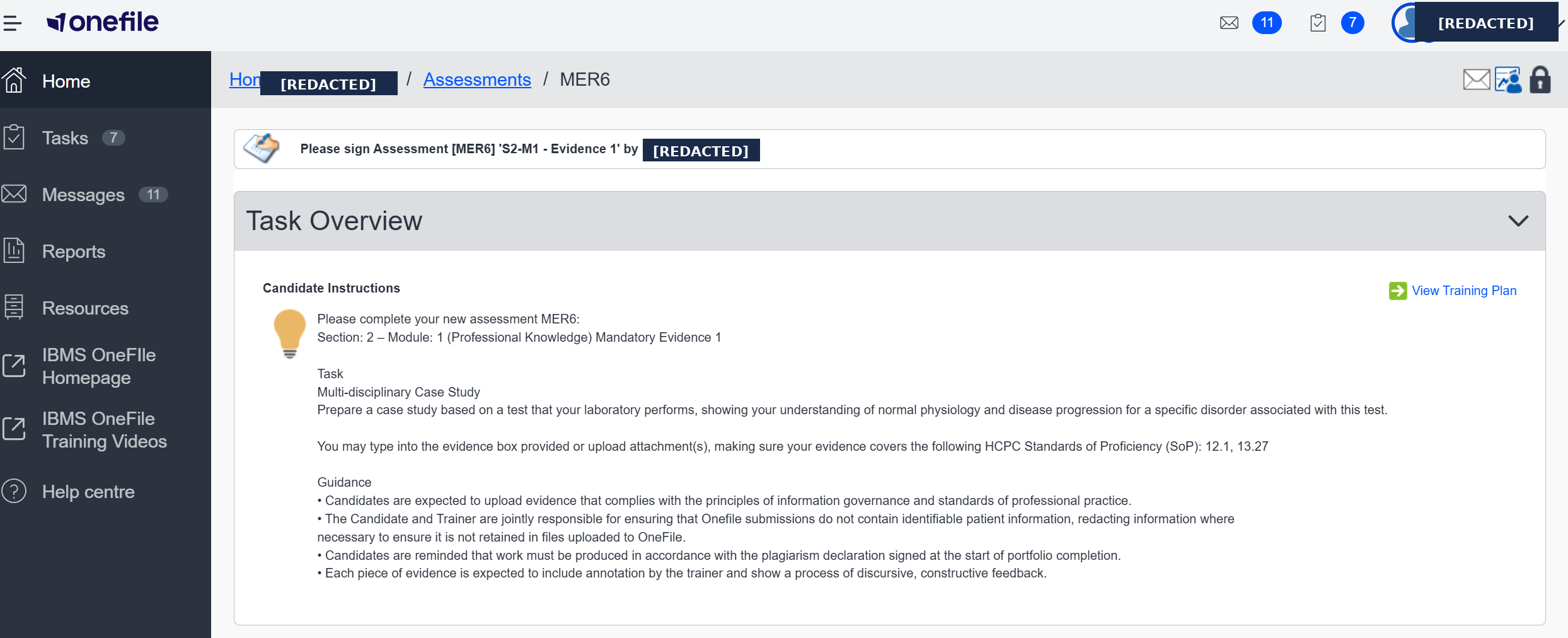
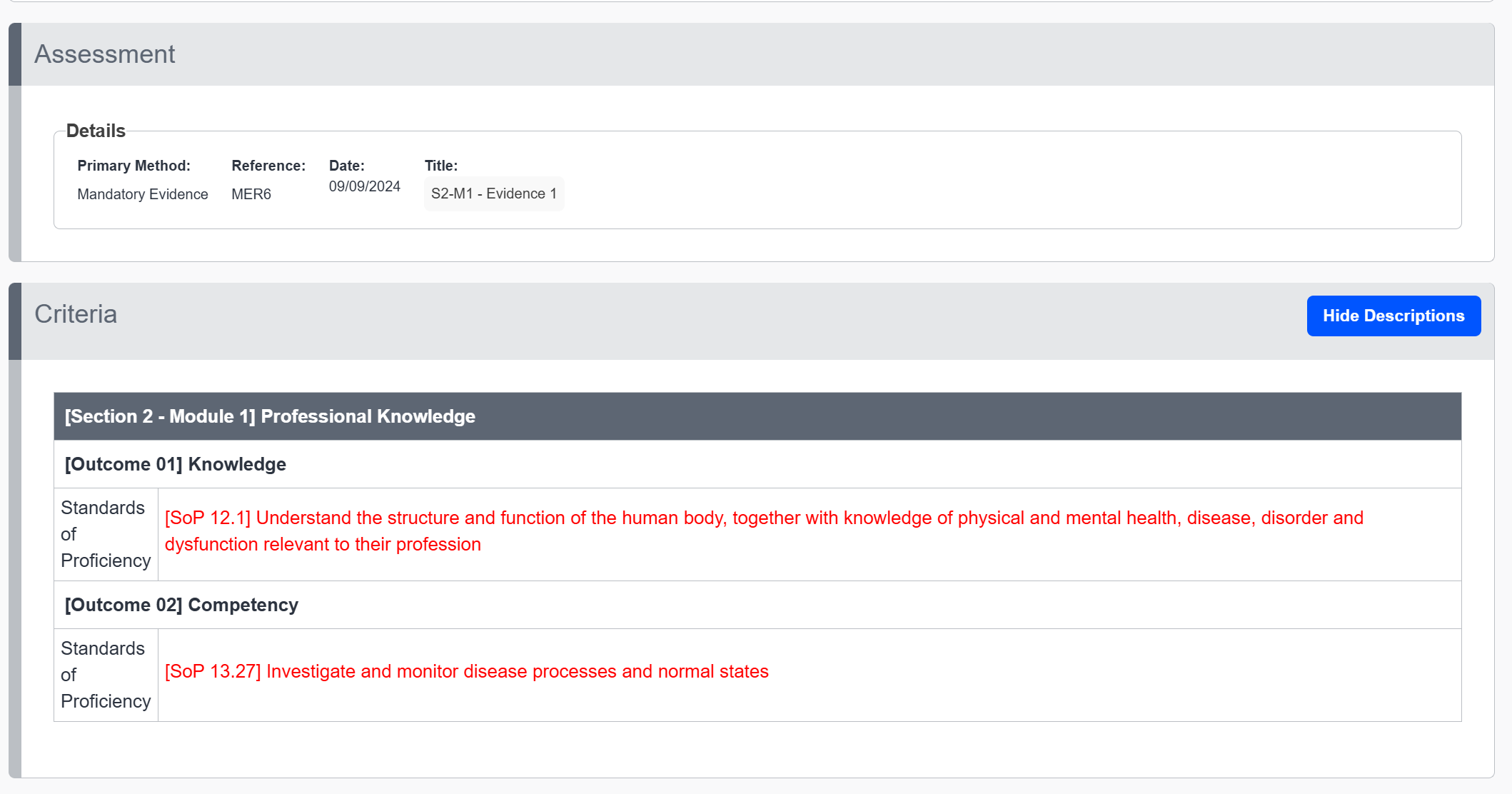
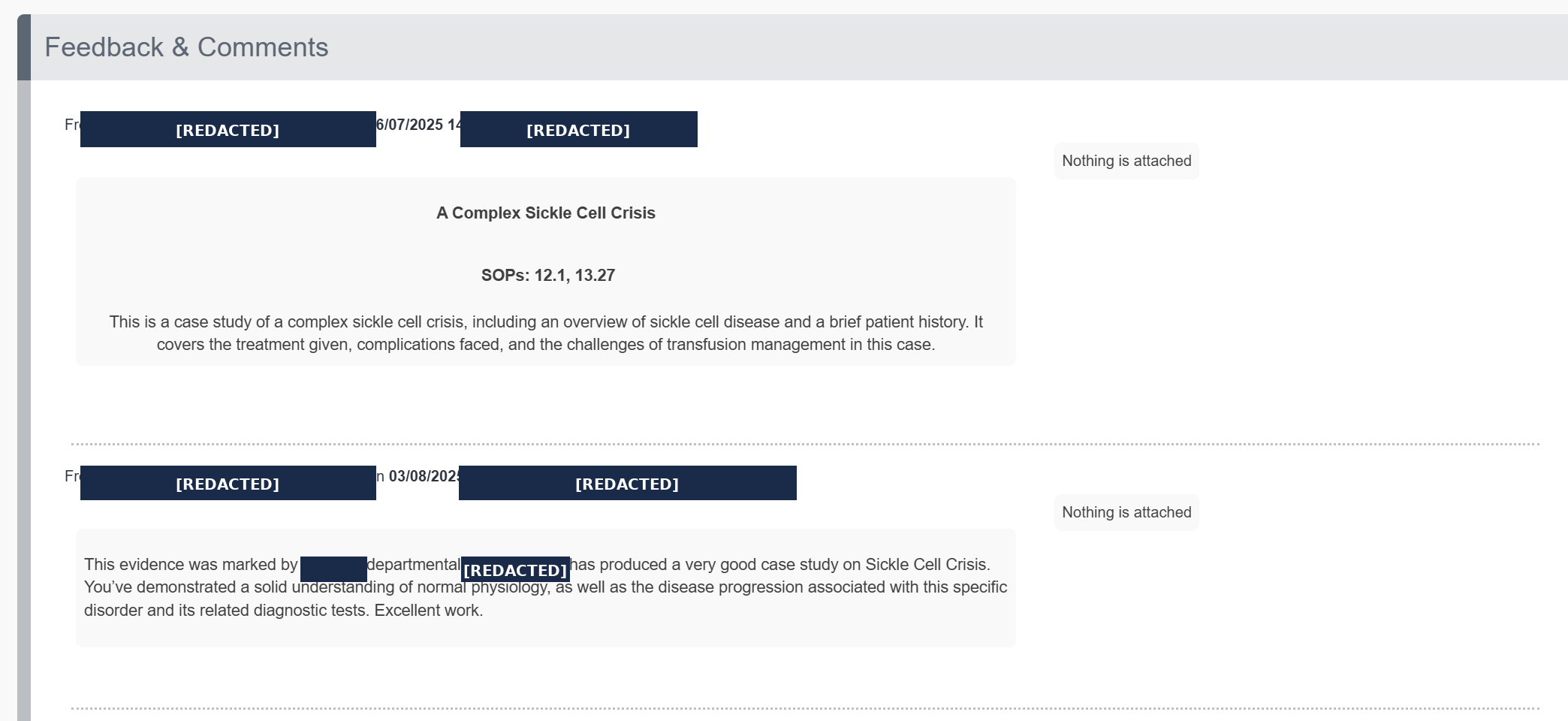
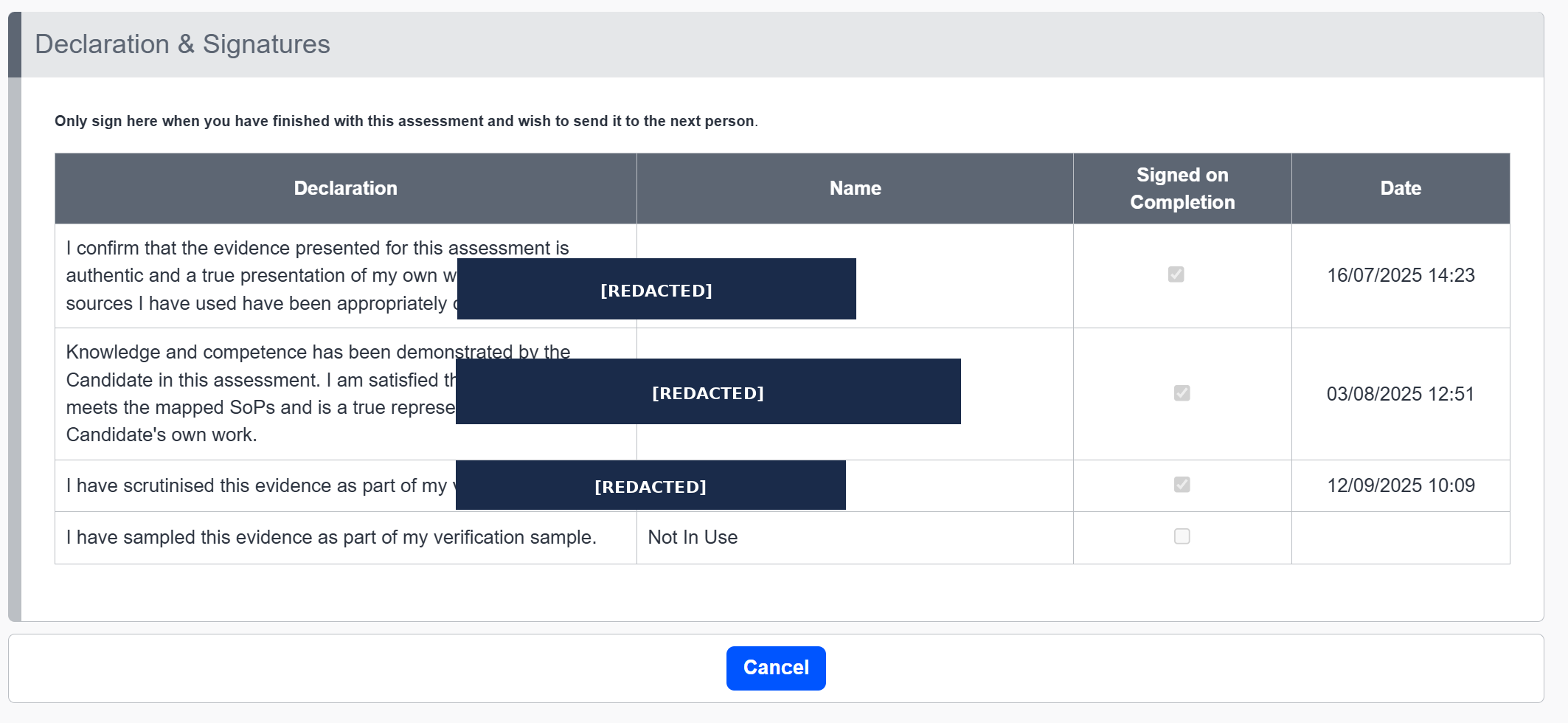
Evidence Planner Coming with PRO
Track, map and organise your Registration Portfolio evidence across all 14 Standards. Architecture in place — functionality launches with Bench & Beyond PRO.
My modules
Evidence planner
My progress
🕐 0 hours logged
📋 0 reflection notes
What’s in Portfolio Academy
All ten modules are live and accessible to Bench & Beyond PRO members. Each module includes Training Officer Perspective notes, worked examples, and key takeaways.
📋 10 Complete Modules
From understanding the portfolio structure to preparing for virtual verification — all 10 modules fully written and available
👁️ Training Officer Perspective
Every module includes insider notes from an experienced Training Officer — the things trainees are rarely told directly
✍️ Reflective Writing Masterclass
Side-by-side weak vs strong reflection comparison based on real portfolio evidence — the most commonly referenced module
⛔ Common Mistakes Guide
The five actual mistakes Training Officers see most often, with specific guidance on how to avoid each one
🎓 Virtual Verification Guide
Step-by-step preparation for the modern virtual verification process, including the PowerPoint lab tour structure
📊 Progress Tracking
Mark modules complete and track your overall Academy progress — saved to your device
🔬 HCPC Standards Explained
Knowledge vs competency SoPs explained in plain English, with guidance on correct citation and referencing
🧠 AI Reflection Feedback
Coming soon — submit your reflection and receive Training Officer-style AI feedback on depth and quality
Get full access to Registration Portfolio Academy
Registration Portfolio Academy is the flagship educational module within Bench & Beyond PRO — joining Employer Directory, Interview Academy and University Hub as part of a growing professional development platform built specifically for UK Biomedical Science.
All existing Bench & Beyond free features remain completely free.
Already have an account?
Sign in to access your dashboard, learning progress and saved content.
New to Bench & Beyond?
Create a free account to save progress, bookmark employers and access your personal dashboard.
How Bench & Beyond PRO supports your career
PRO is designed to provide the right professional resource at every stage of a Biomedical Science career — from choosing a university through to HCPC registration and beyond.
University
Choosing your Biomedical Science degree
University Hub
Compare degrees, accreditation, placements and graduate pathways
Job Hunting
Searching for your first laboratory role
Employer Directory
Explore NHS Trusts, private labs and research organisations
Interview Academy
Prepare for BMS interviews at every level
Portfolio Academy
Plan, collect and reflect on Registration Portfolio evidence
HCPC Registration
Achieving registration as a Biomedical Scientist
Career Progression
Specialist, senior and beyond
Most career resources are designed for a single moment — interview prep, job boards, or portfolio guidance separately. Bench & Beyond PRO brings all of it together in a single professional platform built specifically for UK Biomedical Science.
All twelve Bench Cards, Career Match, Test Your Knowledge and every other existing tool remain permanently free. PRO adds professional depth on top of the foundation you already use.
Limited to 50 founding members. Lock in £4.99/month for three years before the platform opens to general membership.
Four flagship modules
Every Bench & Beyond PRO module is a professional learning platform in its own right. Together they cover the most important decisions and challenges across a Biomedical Science career.
Employer Directory
A dedicated Biomedical Science employer directory — NHS trusts, private laboratories, research organisations and industry employers, with detailed profiles built specifically for BMS professionals.
Who it helps
Graduates, internationally qualified applicants, Trainee BMS and anyone researching where to work or train.
Why it matters
Understanding which employers support portfolio training, offer sponsorship, or recruit graduates changes how you plan your career. This intelligence is impossible to find in one place anywhere else.
Interview Academy
Structured interview preparation across eight role-specific modules, from MLA through to specialist positions. Structured questions with model answers, STAR guidance and assessor insight.
Who it helps
Anyone preparing for a Biomedical Science interview at any career stage — from first laboratory role to Band 6 and beyond.
Why it matters
Interview technique is a learnable skill. Candidates who prepare systematically — understanding what assessors look for and practising realistic questions — consistently outperform those who don't.
University Hub
Compare IBMS-accredited Biomedical Science degrees across the UK. Accreditation, placement opportunities, entry requirements, facilities, graduate pathways and Bench & Beyond recommendations.
Who it helps
Sixth-form students, international applicants, mature students and anyone making a decision about where to study Biomedical Science.
Why it matters
Choosing the wrong degree programme can mean an extra year of study or a non-accredited qualification. Making an informed choice from the start matters significantly to long-term career outcomes.
Registration Portfolio Academy
Ten structured modules covering every aspect of the IBMS Registration Portfolio journey — from evidence planning and reflective writing to assessor perspective and verification preparation.
Who it helps
Trainee Biomedical Scientists working through their Registration Portfolio, MLAs planning progression, and anyone who wants to understand what the portfolio process really involves.
Why it matters
The Registration Portfolio is one of the most challenging aspects of becoming a registered BMS. Candidates with a clear strategic approach to evidence and reflection complete their portfolios more efficiently and with greater confidence.
What’s coming to Bench & Beyond PRO
All future modules are included in your membership at no additional cost. Bench & Beyond PRO expands continuously with content designed around UK Biomedical Science careers.
🎥 Virtual Laboratory Tour
360° interactive tours of NHS and private laboratory environments across multiple disciplines
🌟 Career Match Pro
Enhanced AI-powered career matching with employer-specific pathway recommendations
🤝 Mentor Hub
Structured mentoring connections with experienced Biomedical Scientists
📈 CPD Tracker
Log, track and plan Continuing Professional Development across your career
🤖 AI Career Assistant
A specialist BMS career assistant for professional development support
Professional resources at every stage of your BMS career
Bench & Beyond PRO is not a collection of generic career content. Every resource is built around the specific pathways, requirements and realities of UK Biomedical Science.
Bench & Beyond is entirely independent and is not affiliated with the IBMS, HCPC, NHS or any employer mentioned within the platform. All PRO content is educational guidance only. Always verify requirements directly with the relevant official bodies.
Choose your Bench & Beyond PRO membership
Subscription payments are launching soon. The plans below reflect our membership structure. No payment information is required at this stage.
- All current PRO modules
- All future PRO modules
- Founding Member recognition
- Rate locked for 3 years
- Renews at current price after
Limited places — first 50 members only
- All current PRO modules
- Future modules included
- Cancel anytime
- All current PRO modules
- Future modules included
- Equivalent to £5.83/month
Be first to know when Bench & Beyond PRO launches
Enter your email and we will notify you the moment membership opens — including when Founding Member places become available.
No spam. One email when we launch. Unsubscribe anytime.
Everything you need to know about Bench & Beyond PRO
Who is Bench & Beyond PRO for?
Bench & Beyond PRO is designed for anyone at any stage of a UK Biomedical Science career — from students choosing a university degree through to registered BMS professionals planning their next career move. Every module is built around a specific career stage, so the platform grows with you.
Will new modules be added?
Yes. Bench & Beyond PRO is under active development. Virtual Laboratory Tour, Career Match Pro, Mentor Hub, CPD Tracker and AI Career Assistant are all in development and will be added to the platform. All additions are included in your existing subscription — no extra charges.
Can I cancel at any time?
Yes. Monthly and Annual memberships can be cancelled at any time. Access continues until the end of your current billing period. Founding Member plans are available for the agreed three-year period and renew to the then-current price thereafter.
Will I receive future updates?
Yes. All content updates, new modules and new features are automatically available to all PRO subscribers. There is no need to upgrade your plan or pay additional fees for new content.
What is included with the Founding Member plan?
Founding Members receive access to all current PRO modules and all future modules at £4.99 per month for three years, regardless of any price changes during that period. After three years, the membership renews at the then-current price. Founding Members are also recognised within Bench & Beyond PRO with a Founding Member designation.
Is Bench & Beyond PRO affiliated with the IBMS or HCPC?
No. Bench & Beyond is an entirely independent resource. PRO content is educational only and is not affiliated with, endorsed by, or produced in partnership with the IBMS, HCPC, NHS or any other professional or regulatory body. Always refer to official IBMS and HCPC guidance for definitive requirements.
Testimonials
Testimonials from Bench & Beyond PRO members will appear here once the platform launches. If you would like to share your experience with Bench & Beyond, please visit the page.
Member testimonial coming soon
Member testimonial coming soon
Member testimonial coming soon
The professional platform for UK Biomedical Science careers.
Employer intelligence, interview preparation, university comparison and portfolio guidance — built specifically for UK Biomedical Science, in one professional subscription.
All existing Bench & Beyond features remain permanently free.
Sign in
Welcome back to Bench & Beyond.
No account?
Create your account
Your free account saves your progress, bookmarks your research and gives you a personal dashboard — no subscription required.
Your free account includes
- ✓ Save your progress — pick up exactly where you left off across every guide and tool
- ✓ Bookmark employers and universities — save profiles from the Employer Directory and University Hub
- ✓ Personal dashboard — a central view of your learning, bookmarks and recommended next steps
- ✓ Private notes — add personal notes to any module or employer profile, visible only to you
- ✓ Ready for PRO — your account is all you need to join Bench & Beyond PRO when you’re ready
By creating an account you agree to our and .
Already have an account?
Reset password
Enter your email address and we’ll send a reset link.
Continue Learning
Learning Progress
Saved Bookmarks
No employers saved yet. Browse the to save profiles.
No universities saved yet. Explore the to save favourites.
No questions saved yet. Visit the to bookmark questions.
No notes saved yet. Use the to add personal notes.
Recent Activity
Membership
Account Settings
Admin Hub — Platform Overview
This view is only visible to administrator accounts. Connect to Supabase and deploy authentication to populate live statistics. For full analytics and billing, use the Stripe Dashboard.
Deploy authentication to view live data.
Deploy authentication to view live data.
Module popularity data will populate once users are active.
Account settings
Profile
Change password
Subscription
Loading subscription details…
Admin Dashboard
Membership breakdown
Loading…
Founding Member status
Loading…
This dashboard is only accessible to users with the Administrator role. For full analytics and billing management, use the Stripe Dashboard.
Free Learning Hub
Everything below is completely free. No account required. Bench & Beyond is built on the belief that high-quality career guidance for Biomedical Scientists should be accessible to everyone.
Free, always.
From the Registration Portfolio guide to the Bench Cards library and interactive quizzes — the core Bench & Beyond platform is and will remain free. No trial periods. No content locks on the material below.
Bench & Beyond PRO adds professional depth on top of this foundation — employer intelligence, interview preparation and portfolio tools — but it will never be a paywall for the resources below.
Guides, tools and interactive learning built specifically for UK Biomedical Scientists — from students choosing a degree through to registered practitioners.
Bench & Beyond PRO adds employer profiles, interview preparation and portfolio academy tools.
Everything available free on Bench & Beyond
Click any card to go directly to that resource. No sign-in needed.
Bench Cards
Quick-reference guides covering laboratory quality, sample collection, analytical techniques and discipline-specific topics. Designed for students, trainees and registered BMS.
Career Match
Answer a few questions about your background and goals, and get pointed toward the Biomedical Science roles and routes most suited to where you are right now.
Opportunities Hub
A practical guide to finding Biomedical Science training posts and laboratory roles, including NHS Jobs search guidance, what to look for in job descriptions and application tips.
Advice Hub
Real-world advice from working Biomedical Scientists. Practical guidance on topics that don’t appear in the official documentation — from surviving your first rotation to managing a difficult Training Officer.
Test Your Knowledge
Interactive multiple-choice activities covering Biomedical Science disciplines. Test yourself, check your understanding and reinforce your learning with instant feedback.
Resource Library
Downloadable checklists, a BMS glossary and curated links to official sources including the HCPC, IBMS and NHS Employers. Practical tools for Portfolio trainees and registered practitioners.
HCPC Registration Guide
A plain-English walkthrough of the HCPC registration process — from Certificate of Competence to first pay as a Band 5. Covers fees, timescales, the application itself and what to do when things go wrong.
Registration Portfolio Guide
The Registration Training Portfolio, explained clearly. What it contains, how the evidence is structured, what assessors look for, and how to approach the verification process from day one of your training.
Routes Into Biomedical Science
Every route to HCPC registration, explained in order. The standard graduate route, the equivalence route, the apprenticeship pathway and overseas qualification recognition — compared clearly.
Specialist BMS Hub
What comes after HCPC registration. The IBMS Specialist Portfolio, how Band and title change from registered BMS to Consultant Scientist, and how to navigate the post-registration career landscape.
Bench & Beyond PRO adds professional depth
The resources above are free, always. When you’re ready for employer intelligence, structured interview preparation and a complete Registration Portfolio Academy, Bench & Beyond PRO is designed for exactly that stage of your career.
Reliable guidance in one place
Biomedical Science information is scattered across universities, NHS Trusts, employers, the HCPC and the IBMS. Each organisation publishes what it needs to, but no single resource brings it all together in a way that helps students and professionals make confident decisions at the right time.
Bench & Beyond was created to change that. The platform brings reliable, practical educational guidance together into one place — written specifically for UK Biomedical Scientists at every career stage.
University selection, finding employment, interview preparation, Registration Portfolio training, HCPC registration, specialist practice and long-term career development — in one coherent platform.
Students, graduates, Medical Laboratory Assistants, Associate Practitioners, Trainee Biomedical Scientists, Registered Biomedical Scientists and internationally qualified applicants seeking UK registration.
The problem this platform was built to solve
Many Biomedical Science students and professionals encounter the same challenges at predictable points in their careers. The guidance they need exists — but it is rarely in one place, rarely practical, and rarely written by someone who has navigated those same challenges.
IBMS accreditation, placement availability, entry requirements and graduate outcomes are rarely compared in one place. Choosing the wrong programme can add a year to the qualification journey.
Understanding which employers support portfolio training, what the interview process looks like and what career progression to expect is information almost impossible to find without already being inside the profession.
The IBMS Registration Portfolio is one of the most challenging aspects of becoming a registered BMS. Trainees often begin without a clear understanding of what assessors look for or how to approach evidence strategically.
NHS interview formats, competency frameworks and discipline-specific technical questions are rarely discussed openly. Candidates who prepare systematically consistently outperform those who rely on general interview advice.
The registration process itself — from Certificate of Competence to first pay as a Band 5 — involves multiple organisations, timescales and administrative steps rarely explained in plain language.
Career planning beyond Band 5 — specialist diplomas, Band 6 and 7 progression, management pathways and CPD — is something many registered Biomedical Scientists navigate without formal guidance.
To make the Biomedical Science career journey clearer and less overwhelming, at every stage, for everyone who is navigating it.
Ubaid Sajid
Biomedical Scientist · Clinical Biochemistry · 12+ years NHS & private laboratory experience
Bench & Beyond was founded by Ubaid Sajid, a Biomedical Scientist with over twelve years of experience working across NHS and private laboratory settings. His career has spanned almost every stage of the Biomedical Science pathway — from his first laboratory role through to senior practice and Training Officer responsibilities.
That breadth of experience is what shapes the educational content throughout Bench & Beyond. The guidance on the platform reflects what it is actually like to be a Medical Laboratory Assistant preparing for Band 4, a Trainee BMS working through a Registration Portfolio, a Band 6 Specialist navigating a discipline exam, and a Training Officer responsible for supporting the next generation of Biomedical Scientists.
His specialist discipline is Clinical Biochemistry. The platform draws on this expertise while remaining relevant across all Biomedical Science disciplines.
Career pathway
This experience across every stage of the career pathway provides genuine first-hand insight into the challenges Bench & Beyond is designed to address.
What guides everything we publish
Evidence-based guidance
Every piece of educational content on Bench & Beyond is grounded in the actual requirements of the HCPC, IBMS, NHS and professional practice. We do not publish opinion as fact.
Independence
Bench & Beyond is entirely independent. We are not funded by, affiliated with, or influenced by any employer, university, professional body or commercial organisation.
Professional integrity
We write with accuracy and honesty. If something is uncertain or subject to change, we say so. We direct users to official sources rather than replacing them.
Practical career support
Guidance on Bench & Beyond is designed to be immediately useful — not academic. We focus on what professionals actually need to know at each stage of their career.
Lifelong learning
A Biomedical Science career does not stop at HCPC registration. The platform is designed to remain relevant from university through to senior and specialist practice.
Community first
Bench & Beyond exists for the Biomedical Science community. The core platform is free. PRO tools add professional depth — they do not replace the free educational foundation.
Bench & Beyond is independent
Bench & Beyond is an independent educational platform. It is not affiliated with, endorsed by, or produced in partnership with the HCPC, the IBMS, the NHS, any university, or any employer featured on the platform.
The educational content on Bench & Beyond is intended to help students and professionals understand how these organisations and their requirements fit together. It does not replace the official guidance, regulations or communications issued by any of them.
All official requirements — including HCPC registration criteria, IBMS portfolio standards, NHS employment conditions and university entry requirements — should always be verified directly with the relevant organisation before making career or academic decisions.
Where Bench & Beyond is heading
Bench & Beyond is in active development. The long-term vision is a platform that supports Biomedical Scientists throughout their entire career — not just at the moments they most need guidance, but continuously as the profession evolves around them.
The free educational foundation will continue to grow. Bench & Beyond PRO adds professional tools and structured learning on top of that foundation, with new content and capabilities planned continuously.
In development & planned
“Helping Biomedical Scientists make confident career decisions through independent, practical and evidence-based educational guidance.”
Everything on Bench & Beyond — every guide, tool and resource — exists to serve that single purpose.
UK Public Healthcare Careers
Search official public healthcare recruitment websites across the UK.
Bench & Beyond links directly to the official recruitment website for each nation. No vacancies are stored on Bench & Beyond — ensuring you always access the latest jobs from the official source.




Health & Social Care Northern Ireland
Official public healthcare recruitment website for Northern Ireland.
Search Jobs →The Search Jobs buttons above open the official recruitment website for each nation in a new tab. Bench & Beyond is not affiliated with the NHS, NHS Scotland, NHS Wales or Health & Social Care Northern Ireland. Always verify job details directly with the recruiting organisation.
Employer Directory
The UK’s most comprehensive Biomedical Science employer directory. Browse NHS Trusts, private laboratories, research organisations and industry employers — with detailed information on training, portfolio support and career opportunities.
The professional platform for Biomedical Science careers.
Bench & Beyond PRO is designed to support Biomedical Science students and professionals at every stage of their career — from choosing your first employer to progressing into senior and specialist roles.
Unlike generic job boards, every resource within Bench & Beyond PRO is built specifically around the pathways, requirements and realities of UK Biomedical Science.
Employer Categories
Filter the directory by employer type to find organisations relevant to your career stage and interests.
NHS Trusts
Acute, specialist & community
Private Laboratories
Diagnostic & clinical labs
Research Organisations
NHS research & institutes
Coming SoonUniversities
Academic & teaching labs
Coming SoonIndustry & Diagnostics
Manufacturers & suppliers
Coming SoonBiotechnology
Biotech & genomics
Coming SoonPharmaceutical
QC, R&D & manufacturing
Coming SoonWhy Bench & Beyond PRO?
Bench & Beyond PRO brings together the tools, intelligence and resources that Biomedical Science professionals need to make confident career decisions — at every stage of their career.
Employer Intelligence
Detailed profiles of NHS Trusts, private laboratories and research organisations. Understand training environments, career pathways and what life as a BMS looks like at each employer before you apply.
Interview Preparation
Employer-specific interview insights, question banks and difficulty ratings contributed by verified Biomedical Science professionals. Know what to expect before you walk through the door.
Career Development
Track typical career progression at specific employers, from Trainee BMS through to Band 7 and specialist roles. Make strategic decisions about which employers offer the best long-term progression.
Portfolio Support
Identify employers who actively support IBMS Registration Portfolio completion. Understand mentoring arrangements, assessment cultures and how each employer approaches the registration training period.
Professional Resources
Access CPD opportunities, shift pattern information, laboratory equipment lists and first-hand graduate experience accounts — the practical detail that you cannot find anywhere else.
Future Learning Tools
Interview Academy, Portfolio Academy, University Hub and Virtual Laboratory Tour are all in development and will be included in Bench & Beyond PRO — a single platform for every stage of your BMS career.
Featured Employers Preview — Featured employers
The full directory covers NHS Trusts, private providers and research organisations across the UK, with detailed information on training pathways, portfolio support and career opportunities.
NHS
Guy’s and St Thomas’ NHS Foundation Trust
One of the UK’s largest NHS Foundation Trusts, operating pathology services across South East London in partnership with Synnovis (SYNLAB UK & Ireland). Check the Trust’s NHS Jobs listing for current vacancies.
Comprehensive profile includes
NHS
Leeds Teaching Hospitals NHS Trust
One of the largest NHS trusts in the UK, with comprehensive pathology services across multiple sites in West Yorkshire. Check the Trust’s NHS Jobs listing for current trainee and registered vacancies.
Comprehensive profile includes
Randox Health
Global diagnostics company headquartered in Northern Ireland with testing centres across the UK. Check the employer website for current vacancies and recruitment opportunities.
Comprehensive profile includes